 EN
EN


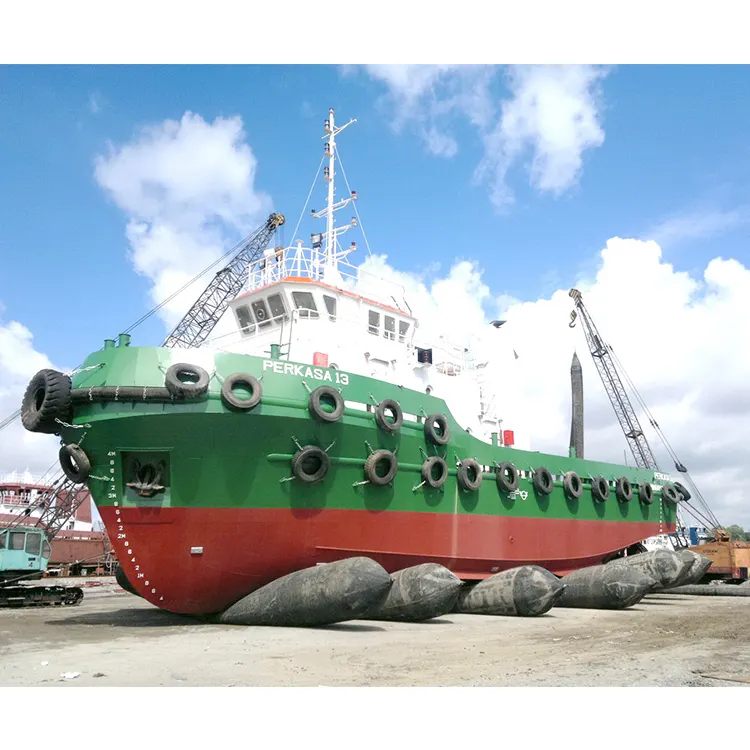
Matching Airbag Capacity to Vessel Weight and Dimensions
Using LOA, beam, draft, and launching weight to determine airbag needs
Getting accurate vessel measurements is key when figuring out what kind of airbags are needed for ship launching. We need to know the length overall (LOA), how wide the beam is, and the operational draft. When calculating the total weight being launched, don't forget to include everything onboard cargo, fuel, even the ballast water. This affects what size airbags we'll actually require. Take a standard 1.5 meter diameter airbag for example it typically supports around 234 tons when inflated to 0.12MPa pressure. But remember this number changes based on how much surface area makes contact and whether the inflation remains consistent throughout. Industry experts always stress checking ground conditions and measuring slipway angles during initial planning stages because these factors impact friction levels and how loads shift dynamically during the launch process.
Selecting airbag size and ply count based on vessel specifications
| Parameter | Typical Range | Load Impact |
|---|---|---|
| Diameter | 0.5m - 3m | Larger diameters spread loads over greater surface area |
| Effective length | 1m - 24m | Longer bags reduce required airbag count |
| Ply rating | 6-8 layers | Each additional ply increases burst pressure resistance by ~15% |
Manufacturers customize configurations based on these parameters: an 8-ply, 18m-long airbag may support a 100m LOA cargo ship, while smaller vessels often use 6-ply models with shorter lengths.
Case-based selection: Aligning ship launching airbag performance with real-world requirements
When putting these systems into actual use, there are several key considerations including how tides behave, the shape of the ship's hull, and what speed things need to be launched at. Looking back at data from 42 different launches in 2023 shows something interesting about bigger ships - those over 10,000 deadweight tons had nearly perfect results (around 98%) when their airbags were made just a bit larger than needed calculations suggested, typically around 20% extra capacity. Getting everything right before deployment means checking against ISO 14409 guidelines while also thinking about local conditions like the angle of the ocean floor beneath where operations will take place and figuring out when weather conditions will actually allow work to happen without risking damage or delays.
Load Distribution and Airbag Arrangement for Safe, Balanced Launching
Proper load distribution across ship launching airbags is critical to maintaining structural integrity and preventing failure during launch.
Calculating Required Number of Airbags for Uniform Load Support
To figure out how many airbags are actually needed, most professionals just take the total weight of the ship and divide that by what one airbag can handle safely. Then they throw in an extra 25 to 30 percent just to be on the safe side. Let's say we're talking about a big 3,000 ton boat here. If each airbag is rated for around 150 tons, simple math tells us we need about 24 main ones plus another six as backups. When it comes to setup, experienced workers know that lining them up in straight rows along the middle of the ship helps keep things stable during launch operations. This arrangement prevents any sideways wobbling that could cause problems later on.
Optimal Spacing and Alignment to Prevent Overloading and Misalignment
Airbags should be spaced uniformly, typically every 10-15% of the vessel's length-approximately every 7-12 meters for a 150-meter ship. Misalignment can increase individual unit pressure by up to 70% (Marine Engineering Journal, 2023), significantly raising rupture risks. Laser alignment tools or tension sensors are used pre-inflation to verify proper positioning.
Avoiding Airbag Failure Through Balanced Load Distribution
Getting the weight distribution right is actually pretty important for preventing those nasty blowouts we all want to avoid. When monitoring things in real time, operators typically install pressure sensors on every single airbag, place strain gauges at strategic spots along the hull, and do regular visual checks to spot any areas where compression looks off balance. According to field data from several recent operations, properly balanced systems cut down airbag failures by around 60% versus when everything's loaded haphazardly. Before launching anything serious, there are strict rules about not letting any individual airbag go beyond about 85% of what it was rated for, especially during those tense moments when things can get really unstable if something goes wrong.
Safety Margins, Pressure Control, and Risk Mitigation
Incorporating safety factors to prevent under-sizing and ensure reliability
When picking airbags for ships, most engineers build in about 20 to 25 percent extra capacity beyond what's needed at maximum load. Take a 15,000 ton ship as an example – we're looking at around 18,750 tons worth of protection overall. According to recent research published in Naval Architecture Quarterly back in 2023, this kind of buffer cuts down on failures by roughly one third compared to systems built just to the bare minimum specs. The extra room accounts for all sorts of unpredictable factors that come into play out on the water, from changing tides to cargo shifts during transit.
Adjusting initial inflation pressure (pᴛ) based on ship weight
Initial inflation pressure (pᴛ) typically ranges from 12-18 psi (0.08-0.12 MPa), adjusted according to vessel type and weight distribution. Heavy bulk carriers may require 22% higher pᴛ than similarly sized container ships to maintain rigidity. Calibration follows manufacturer load-capacity curves that incorporate rubber elasticity and reinforcement layer behavior under stress.
Monitoring pressure limits to avoid rupture during launch
Modern systems monitor pressure every 0.5 seconds using industrial IoT sensors, triggering alerts at 80% of maximum rated pressure-providing an 8-12 minute response window. Since 68% of failures occur within 10 minutes of abnormal readings (Marine Safety Council, 2023), secondary relief valves activate automatically at 90% capacity to balance operational speed with material safety.
Compliance with International Standards for Quality Assurance
Ensuring Compliance with ISO 14409 for Safe and Certified Operations
ISO 14409 ensures safety and performance by requiring rigorous testing for burst strength, fatigue resistance, and load distribution. Airbags must withstand 1.5 times their rated working pressure, providing a built-in 30% safety buffer (ISO 2023). Third-party certification verifies compliance with minimum elongation (≥350%) and tear resistance standards, both crucial for heavy-vessel launches.
Trusted Manufacturers: Verified Load Capacities and Performance
Reputable suppliers undergo annual recertification audits and validate load capacities using hydraulic test rigs that simulate over 10,000 launch cycles. These tests confirm reliable performance for vessels up to 30,000 metric tons. Independent research indicates ISO 14409-compliant airbags reduce launch failures by 73% compared to non-certified alternatives (Marine Safety Journal, 2023).
The Role of Precise Calculations in Standards-Compliant Launches
Accurate calculations of draft, buoyancy shifts (±15% due to tides), and hull-induced load variations (±8%) are vital for meeting ISO 14409's dynamic requirements. Real-time pressure monitoring systems now automate compliance, ensuring inflation remains within 85-110% of design specifications throughout the launch sequence.
Frequently Asked Questions
What factors influence the size and number of airbags needed for ship launching?
The size and number of airbags needed depend on vessel dimensions, weight, diameter, effective length, and ply rating. Calculations should consider loading weight, environmental conditions, and safety margins.
How do slipway angles affect airbag requirements?
Slipway angles impact friction levels and load dynamics during launch, which in turn affects airbag capacity and arrangement requirements.
What are the benefits of using larger airbags with extra capacity?
Larger airbags with extra capacity provide additional support and reduce the likelihood of failure, allowing for safer operations under dynamic conditions.
Why is it important to comply with ISO 14409?
Compliance with ISO 14409 ensures that airbags meet rigorous safety and performance standards, reducing the risk of failure during challenging launches.