 EN
EN


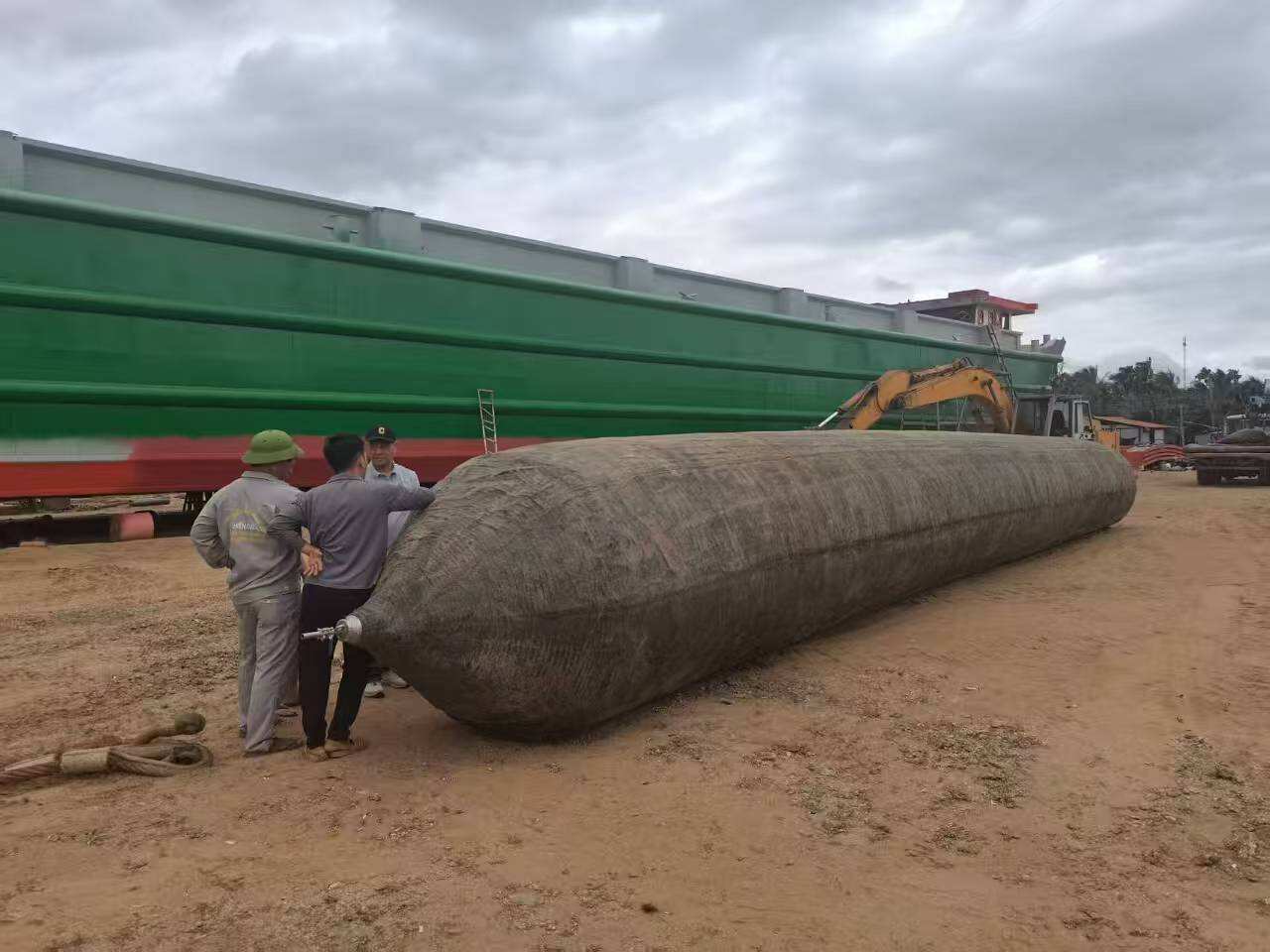
ISO 14409:2011 Compliance: The Non-Negotiable Standard for Marine Rubber Airbags
Core design and performance requirements for ship launching and docking
The ISO 14409:2011 standard lays down essential guidelines for marine rubber airbags when it comes to launching and docking ships. These special airbags need to handle massive weights without losing their shape or breaking apart during those tricky vessel movements. One big deal is making sure the pressure spreads evenly so the ship's hull doesn't get damaged. They also have to stand up to repeated stress tests that simulate actual launches. According to recent studies from Marine Safety Journal (2023), following this standard cuts down on failed launches by around three quarters compared to older models that weren't certified. Beyond just size and shape, the rubber itself needs specific characteristics too. Things like how strong it is when stretched, how much it can stretch before snapping, its firmness level, and protection against ozone degradation all play important roles. This ensures they work reliably whether deployed in freezing Arctic waters or sweltering tropical ports where temperatures fluctuate wildly throughout the day.
Rated pressure, burst pressure (3 times), and load-bearing validation methods
Rigorous pressure testing forms the cornerstone of ISO 14409 compliance. Marine rubber airbags must demonstrate:
- Minimum burst pressure of 3 times the rated working pressure (e.g., 0.45 MPa rated requires 1.35 MPa burst)
- Load-bearing capacity verified through hydraulic test rigs simulating 10,000+ launch cycles
- Elastic recovery ≥92% after 72-hour compression at maximum rated load
Third-party certification bodies validate these parameters using strain gauges and deformation sensors, ensuring airbags maintain ≤5% permanent deformation after testing. This multi-layered validation prevents catastrophic failures during critical operations involving vessels up to 30,000 metric tons.
Material & Durability Testing: Ensuring Long-Term Reliability of Marine Rubber Airbags
Tensile strength, elongation, hardness, and ozone resistance per ISO standards
Marine rubber airbags face massive mechanical stress when ships are launched into water. To check if they can handle this punishment, manufacturers run them through a battery of ISO standard tests. The key things they look at include tensile strength according to ISO 37 standards, which basically tells how well the material resists tearing when stretched. They also test elongation at break using the same ISO 37 method to see what happens when the material is stretched beyond its limits. Hardness measurements following ISO 48 standards help determine whether the airbag will hold up against compressive forces. And finally there's ozone resistance testing per ISO 1431 standards that shows how much damage occurs from long-term exposure to atmosphere. Rubber blends that pass the ISO 1431-1 ozone resistance requirements tend to crack about 40 percent less frequently after five years in saltwater conditions compared to those that don't meet these specs. All these tests are important because they make sure the airbags keep their pressure ratings intact while still being safe enough for actual ship launching operations.
How material degradation affects service life in tidal, UV, and abrasion-prone environments
Materials tend to break down much faster in areas where they're constantly exposed to saltwater, sunlight, and rubbing against boat hulls. The sun alone can cut rubber's strength by about 25% each year if it doesn't have proper protection from UV damage according to lab tests like ISO 4892-3. Meanwhile, all that back and forth movement against surfaces wears away the outer layer, making materials thinner and weaker over time. Ports also create problems because of the constant cycle of ozone and oxidation that makes cracks appear sooner. Better quality rubber stands up to this punishment though. Some high-end products still keep around 90% of their flexibility even after going through 20,000 compression cycles as shown in ISO 4666 testing standards. This means these premium options last far longer than cheaper materials which fall apart quickly when subjected to tough marine conditions. Most experts suggest checking components at least twice a year to spot early signs of wear and tear before serious failures occur.
Third-Party Certification: Why LR, DNV, ABS, BV, CCS, and CCS Nanhai Matter for Marine Rubber Airbags
Certification scope, audit frequency, and traceability per IMO MSC.1/Circ.1496
IMO MSC.1/Circ.1496 mandates rigorous third-party validation for marine rubber airbags by classification societies including Lloyd’s Register (LR), DNV, ABS, Bureau Veritas (BV), China Classification Society (CCS), and its specialized Nanhai branch. Annual audits verify critical compliance dimensions:
- Design validation: Confirming structural integrity under rated pressure
- Material traceability: Batch-level documentation of rubber compounds and reinforcements
- Production surveillance: On-site checks of manufacturing consistency
- Performance testing: Hydrostatic pressure and airtightness verification
The certification process actually includes everything from the ISO 14409:2011 standards right down to that important 3 times burst pressure requirement, all backed up by proper documentation throughout the supply chain. Looking across different industries, there's evidence suggesting these measures stop about 8 out of 10 problems at certified facilities. How often audits happen depends on how risky the environment is. Places where equipment gets used heavily need checks every year, whereas regular setups can wait two years between inspections. Organizations such as CCS Nanhai are taking things further by implementing digital passports for materials. These basically connect every single part back to its original testing records, creating a kind of permanent paper trail for quality assurance purposes.
Real-World Performance Validation: Airtightness, Elastic Recovery, and Load-Deformation Behavior
Testing marine rubber airbags in real field conditions involves checking three main performance factors. For airtightness, we run long submersion tests to see if pressure holds up over time. If there's more than 1% loss per hour, the product doesn't meet ISO 14409 standards which is pretty important for most manufacturers. When it comes to how well they bounce back, we compress them for 72 hours at their rated load capacity. Most companies look for at least 95% recovery so the airbags don't get permanently deformed after multiple launches from ships or barges. We also do load-deformation testing on hydraulic platforms that mimic what happens when waves hit or vessels collide. This helps us spot potential weak spots before problems occur in actual use. All these tests matter because safety depends on it. Airbags that stay within about 5% variation during dynamic loading tend to perform reliably even when conditions get rough out at sea.
FAQ
What is ISO 14409:2011?
ISO 14409:2011 is a standard that sets design and performance requirements for marine rubber airbags used in ship launching and docking to ensure safety and reliability.
Why is certified third-party validation important?
Certified third-party validation by organizations like LR, DNV, and ABS ensures that marine rubber airbags meet international safety standards and have been rigorously tested for reliability and performance.
How does material testing impact marine rubber airbags?
Material testing ensures that the rubber used in airbags can withstand mechanical stress, UV exposure, and environmental conditions, which prolongs the lifespan and maintains performance standards.
What are the real-world performance factors tested for marine rubber airbags?
Real-world performance testing for marine rubber airbags involves assessing airtightness, elastic recovery, and load-deformation behavior to ensure they perform well in adverse marine conditions.
Table of Contents
- ISO 14409:2011 Compliance: The Non-Negotiable Standard for Marine Rubber Airbags
- Material & Durability Testing: Ensuring Long-Term Reliability of Marine Rubber Airbags
- Third-Party Certification: Why LR, DNV, ABS, BV, CCS, and CCS Nanhai Matter for Marine Rubber Airbags
- Real-World Performance Validation: Airtightness, Elastic Recovery, and Load-Deformation Behavior
- FAQ