 EN
EN


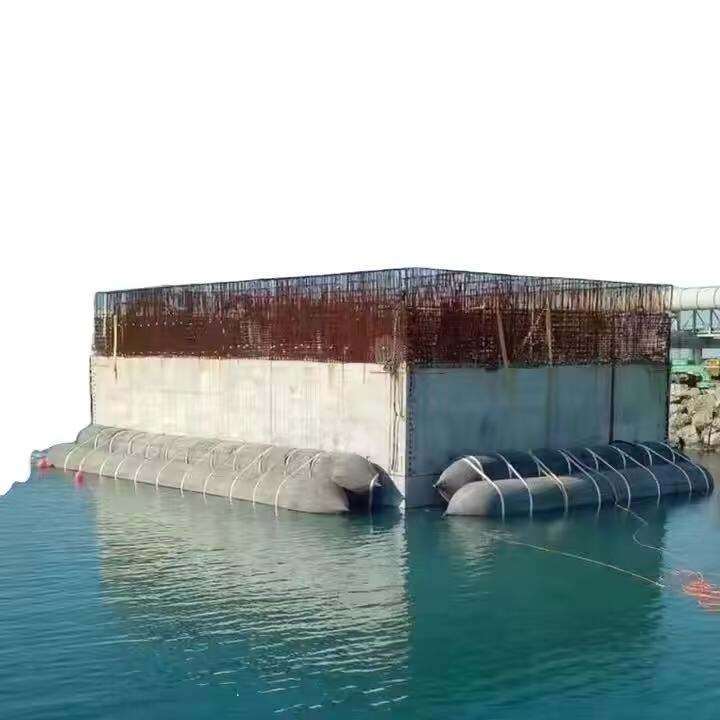
Material and Structural Integrity: The Foundation of Reliable Ship Salvage Airbags
High-Strength Synthetic Tire-Cord Reinforcement vs. PVC-Coated Fabric Durability
Today's ship salvage airbags depend heavily on reinforced materials that can handle brutal underwater conditions. The synthetic tire cord layers inside these bags offer around three times the tensile strength compared to old school PVC coated fabrics when deployed at about 15 meters deep. They hold up remarkably well under pressure too, staying intact even when compressed by as much as 4,000 pounds per square inch. What makes them so reliable is their layered construction which stops tiny tears from spreading when they get dragged over jagged wreckage. Plus, special polymers built into the fabric fight off both UV damage and saltwater corrosion that would normally break down regular materials pretty quickly. Traditional PVC options tend to become rock hard once temperatures drop below five degrees Celsius, making them practically useless in cold water rescue missions. Since the quality of the core material really affects how long these airbags last between repairs and how strong those seams stay intact, this ultimately decides if an airbag can go through multiple inflation cycles without blowing out mid operation during important recovery jobs.
Screw-Type Enlacing Design Eliminates Welded Seam Failures
Marine engineers have found that about three out of four airbag failures come from welded seams. These seams tend to concentrate stress points which can't handle the kind of dynamic forces they face underwater. A better solution comes in the form of screw type enlacing. Instead of those weak spots, it creates continuous spiral threads that spread pressure more evenly throughout the whole surface area. The mechanical interlock design actually holds up under around 6.2 bar of force, which is roughly double what welded seams can manage before failing. This makes all the difference when there's sudden decompression situations where traditional airbags might tear apart like a zipper pulling open. Plus, the smooth surface doesn't attract barnacles as much and cuts down on water resistance when positioning equipment accurately in deep sea environments.
Safety-Certified Performance: Burst Pressure, Safety Factor, and Valve Reliability
Minimum 4:1 Safety Factor Validation Under Dynamic Load Conditions
Ship salvage airbags need at least a 4 to 1 safety margin, meaning they can handle four times what they're actually rated for before bursting. This kind of buffer is essential when working underwater where conditions are constantly changing. The extra capacity handles all sorts of unexpected stresses like sudden shifts in weight during tides, movement of submerged debris, and sideways pressure from strong currents. To make sure these airbags stand up to real world demands, independent testers run them through over 200 simulated lifts. These tests check how well the materials hold up under maximum loads, giving manufacturers confidence about their product's durability in actual salvage operations.
Precision-Machined Safety Valves for Controlled Inflation and Emergency Deflation
When it comes to salvage operations where every second counts, valve reliability can make all the difference. Precision machined parts keep things tight so there's absolutely no leakage when inflating slowly, yet they still allow complete deflation in just seconds flat if pressure gets close to hitting 75% of the burst limit. We run hydrostatic tests to check for any deformation at 1.3 times working pressure, and our pneumatic checks show leak rates stay under 0.1%, which ticks boxes for both ISO 11227 and DNV-GL standards on underwater pneumatic systems. What this really means is operators get consistent control that adapts to changing depths whether they're deploying equipment normally or dealing with emergencies down deep.
Lifting Capacity and Depth-Adapted Operation for Real Sunken Ship Rescue
Calibrated Buoyancy Range (50–2000 Tons) with Vertical Deployment Accuracy
Ship salvage airbags are built to handle all sorts of situations out there on the water, providing just the right amount of lift for anything between 50 tons and 2000 tons. We test every size category using standard hydrostatic methods to make sure they work as intended. Salvage crews can pick the right bag size depending on what they need to move, whether it's a little fishing boat or something massive like a container ship. Getting these bags deployed straight up and down is super important when working near delicate wreck sites because otherwise things tend to spin around. The pressure monitoring tech inside actually changes how much air goes in as the wreck comes up, compensating for the way water pressure affects materials at different depths. Real world tests show these systems stay pretty close to planned routes too, staying within about 1.5% off course under 15 meters deep. That means teams can usually get recovered ships landed within two meters of where they want them, which makes a huge difference in operations.
Proven Abrasion & Pressure Resistance in Shallow to 25-Meter Deep Water
Equipment operating between 0 and 25 meters needs to handle serious wear and tear from both friction and pressure. The outer layer is built tough enough to last over 200 hours touching rough seabeds without showing signs of wear, as confirmed by ASTM D751 tests for dragging resistance. Inside, special layered polymer structures keep things stable even when pressures reach around 2.5 atmospheres, which is what happens at about 25 meters depth. When it comes to saltwater corrosion, this stuff holds up for more than 5,000 hours in speeded-up aging tests. Plus, special coatings that repel water stop marine organisms from sticking to surfaces. All these improvements mean maintenance crews can go 40% longer between checkups than they would with standard equipment. This makes all the difference in places like tidal areas, busy harbors, and those tricky nearshore salvage operations where downtime costs money.
Field-Validated Reliability: Case Evidence from Actual Ship Salvage Operations
The real test of any salvage airbag comes down to what happens out there in the field. Field reports consistently show that well-engineered systems can deal with all sorts of challenges like moving debris, powerful underwater currents, and the relentless effects of saltwater corrosion something lab conditions just cant match. Take one recent operation in the Mediterranean Sea where certified airbags held at least 98 percent pressure integrity even after sitting underwater for three full days while helping lift a massive 1,200-ton ship from nearly 18 meters below the surface beating industry standards handily. Looking through independent analyses of salvage records reveals another telling pattern field tested airbags finish jobs around 40 percent quicker and experience roughly 30 percent fewer safety issues compared to products that havent been properly validated first. For anyone shopping around for equipment suppliers, look closely at companies that provide concrete case studies showing actual numbers not just claims. Metrics matter operational depth reached, tons successfully recovered, how much tidal fluctuation was handled, and most importantly how long they maintained pressure under stress these are the kinds of details that really tell us if a product will perform when lives are on the line during emergencies.
FAQ
Why are synthetic tire cords used in ship salvage airbags?
They provide three times the tensile strength compared to PVC-coated fabrics, enhancing durability and reliability under pressure.
What is the benefit of a screw-type enlacing design over welded seams?
It distributes pressure more evenly, reducing failure risks by eliminating stress concentration points.
How is valve reliability ensured during salvage operations?
Precision-machined safety valves undergo extensive testing for controlled inflation and rapid deflation as needed.
What lifting capacities do ship salvage airbags have?
They can handle loads ranging from 50 to 2000 tons, catering to different salvage scenarios.
How do ship salvage airbags perform under field conditions?
Field reports indicate superior reliability and performance, meeting and exceeding industry standards in challenging environments.
Table of Contents
- Material and Structural Integrity: The Foundation of Reliable Ship Salvage Airbags
- Safety-Certified Performance: Burst Pressure, Safety Factor, and Valve Reliability
- Lifting Capacity and Depth-Adapted Operation for Real Sunken Ship Rescue
- Field-Validated Reliability: Case Evidence from Actual Ship Salvage Operations
-
FAQ
- Why are synthetic tire cords used in ship salvage airbags?
- What is the benefit of a screw-type enlacing design over welded seams?
- How is valve reliability ensured during salvage operations?
- What lifting capacities do ship salvage airbags have?
- How do ship salvage airbags perform under field conditions?