 EN
EN


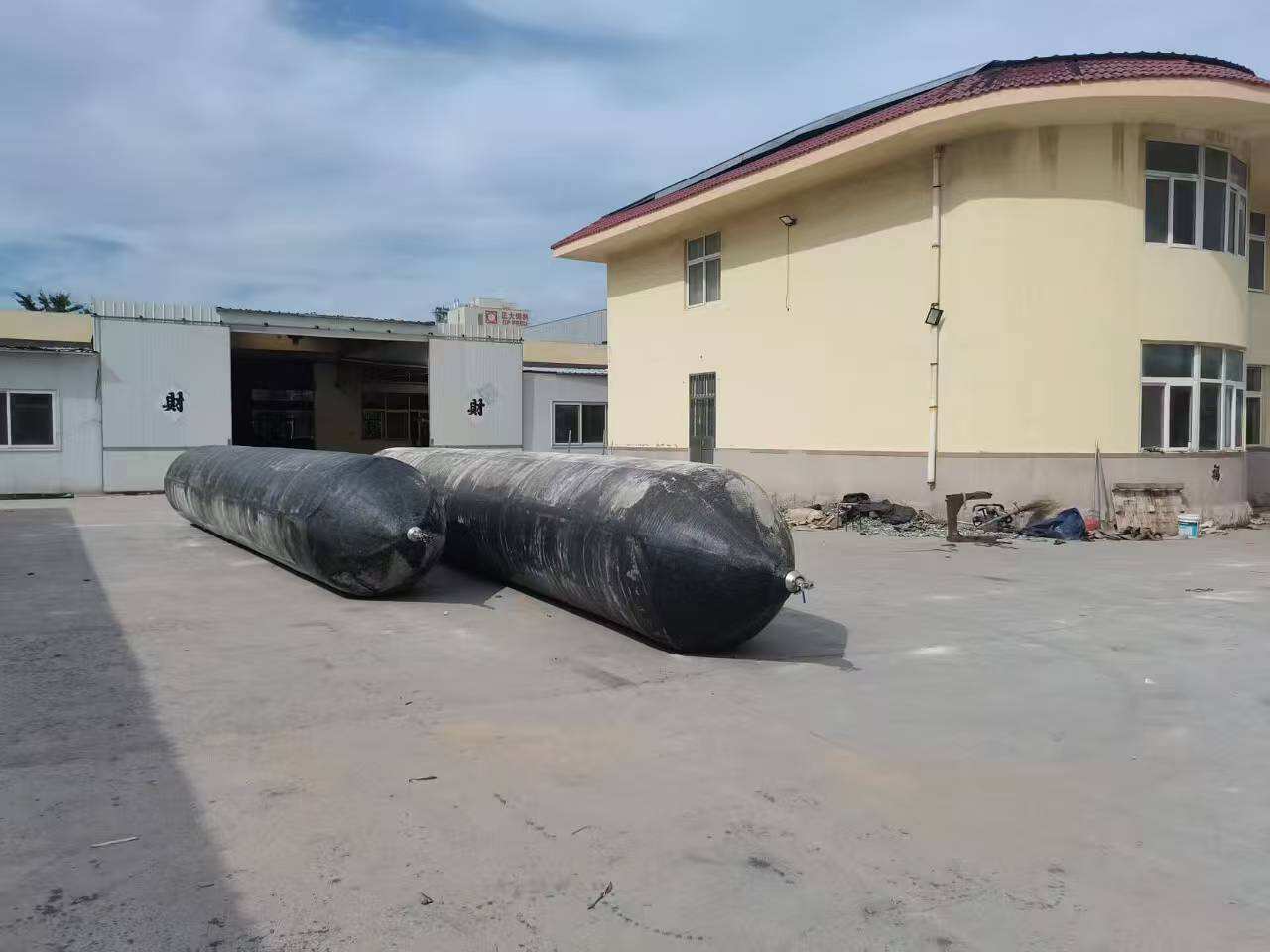
Understanding Ship Launching Airbag Capacity for Large Vessels
Maximum Supported Vessel Size: From 85,000 to 100,000 DWT
Today's airbag systems for ship launching can handle ships weighing anywhere between 85,000 and 100,000 deadweight tons. That includes big bulk carriers as well as tankers. The reason these systems work so well is because of improvements in rubber composites that have multiple layers and better control over how much air goes into each bag. This helps spread the weight evenly across the ship's hull when it's being launched. When we look at older methods like slipways, airbags cut down on costs by about half for really heavy ships. Plus, there's no need to wait for certain tides anymore since airbags aren't affected by water levels.
Why 100,000 DWT Is the Current Industry Benchmark for Heavy-Duty Airbags
The 100,000 DWT threshold represents the practical upper limit of today's commercially deployed airbag technology, constrained by material elasticity, pneumatic stability during water entry, and alignment with global shipyard infrastructure standards for cradle-free launching. Specifically:
- Rubber compounds reach fatigue limits beyond ~40% compression under mega-vessel loads
- Maintaining pressure integrity during the dynamic water-entry phase demands precise valve response and thermal management
- Existing yard layouts, cradle clearances, and winch capacities are optimized for this scale
While next-generation prototypes using nano-reinforced textiles and AI-driven pressure sequencing aim for 120,000 DWT capability, current operational deployments remain anchored at 100,000 DWT per the International Maritime Organization's (IMO) Guidelines on Alternative Launch Methods [IMO MSC.1/Circ.1623].
Key Technical Specifications of Heavy-Duty Ship Launching Airbags
Diameter, Effective Length, and Layer Count (DW-6 to DW-8) for Load Distribution
The diameter range of 1.0 to 2.5 meters, combined with an effective length between 5 and 25 meters, along with the number of layers all work together to determine how much surface area is available, what kind of pressure the structure can handle, and how strong it remains overall. When we look at larger diameters, they help distribute the weight across broader sections of the hull, which reduces stress concentrations in specific areas. The effective length needs to be at least 10 percent longer than the vessel's beam dimension to cover the entire keel properly and avoid problems with tipping caused by overhangs. For layer configurations, there are three main types: DW-6 has six plies, DW-7 seven plies, and DW-8 eight plies. Each additional ply adds roughly 20 percent more burst strength compared to the previous level, making DW-8 capable of handling continuous pressures above 740 kilopascals. This design keeps things stable even when loads aren't distributed evenly throughout the vessel, something especially important for ships weighing anywhere from 85,000 to 100,000 deadweight tons.
QP/QG/QS Classification System: Matching Bearing Capacity to Vessel Launching Demands
The ISO 19901-6–aligned QP (Primary), QG (General), and QS (Special) classification system standardizes performance expectations across launch scenarios:
- QP-grade: Designed for coastal and inland vessels ≤15,000 DWT; features basic 6-ply construction and mechanical pressure relief
- QG-grade: Optimized for mid-size ships (15,000–60,000 DWT); incorporates denser cord reinforcement and calibrated pressure valves
- QS-grade: Engineered for ultra-heavy launches (>60,000 DWT); uses 8+ ply matrices, puncture-resistant surface compounds, and dual-stage inflation control
Selecting QS-grade airbags for Panamax-class carriers reduces measured hull stress by 34% compared to QP units, as validated by independent testing conducted by the China Classification Society (CCS) and reported in Marine Structures (Vol. 47, 2023). Matching classification to block coefficient-derived load models ensures optimal safety margins without over-engineering.
How Vessel Dimensions Drive Ship Launching Airbag Selection
LOA, Beam, Draft, and Launching Weight: Geometry-Based Sizing and Spacing Guidelines
Four core dimensions directly dictate airbag configuration:
- LOA (Length Overall) determines required quantity and longitudinal spacing–typically one airbag per 8–12 meters of hull length, with spacing ≤1.5× airbag diameter
- Beam sets the minimum effective length: airbag length = beam + 10% margin to guarantee full lateral support
- Draft informs inflation pressure profiling, especially during the critical transition from land to water
- Launching weight governs both layer count (6–8+ plies) and classification (QP/QG/QS), with bearing capacity calculated at a minimum 2.5:1 burst ratio
Industry best practices–endorsed by the American Bureau of Shipping (ABS) Guidance Notes on Airbag Launching (2022)–emphasize geometry-first selection: mismatched airbag length or spacing introduces uncontrolled bending moments, particularly in high-block-coefficient hulls.
| Dimension | Design Impact | Safety Threshold | |------------------|-----------------------------------------|------------------------| | Draft Depth | Inflation pressure profile | Max 0.8 bar deviation | | Launching Weight | Layer count (6–8+ plies) & QP rating | 2.5:1 burst ratio | | Beam Width | Airbag length = Beam + 10% margin | Full keel coverage | Safe Deployment Strategy for Large-Vessel Launching with Airbags
Bearing Capacity Calculation: Safety Coefficient, Block Coefficient, and Real-World Load Modeling
Getting things safely deployed starts with proper bearing capacity modeling. We're not talking about just looking at static weights here, but also how loads behave dynamically over time. Most engineers stick to a safety factor around 1.5, though this goes up to about 2.0 when dealing with larger ships above 85,000 deadweight tons. Why? Because those kinds of vessels face all sorts of temporary stresses from waves hitting them, hulls bending under pressure, and ground settling unevenly beneath the structure. Then there's the block coefficient thing too. Ships with higher Cb values (over 0.8) need their weight spread out more evenly across the whole surface area. But if a ship has a lower Cb rating below 0.6, the forces tend to bunch up near the bottom part of the hull where it meets the waterline. That means we often have to reinforce those areas specifically with airbags or other support systems to handle the concentrated stress points properly.
When putting this all together in real world situations, engineers combine factors like tidal conditions, seabed angles, launch speed, and ship shape using something called finite element analysis or FEA for short. Field tests done by Lloyd's Register back this up (their report number is LR/TP/1127/2021 if anyone cares). What we found is that placing things based on FEA calculations cuts down maximum stress on the hull by around 41% compared to just guessing where stuff should go. That makes a huge difference when dealing with ships getting close to that 100,000 deadweight ton limit. Instead of relying on old school methods, this whole process turns what was once mostly guesswork into something that can actually be planned out and checked properly.
FAQs on Ship Launching Airbags for Large Vessels
What is the maximum vessel size supported by ship launching airbags?
The current technology supports vessels weighing between 85,000 and 100,000 deadweight tons.
Why are airbags preferred over traditional slipways for ship launching?
Airbags offer cost efficiency, eliminate the need for specific tide timings, and ensure even weight distribution, thus reducing stress on the hull.
What materials are used in the construction of these airbags?
The airbags are made using advanced rubber composites with multiple reinforcement layers.
Are there any plans to increase the capacity of these airbags beyond 100,000 DWT?
Yes, next-generation prototypes using advanced textiles and AI technology aim to support vessels up to 120,000 DWT.
Table of Contents
- Understanding Ship Launching Airbag Capacity for Large Vessels
- Key Technical Specifications of Heavy-Duty Ship Launching Airbags
- How Vessel Dimensions Drive Ship Launching Airbag Selection
- Safe Deployment Strategy for Large-Vessel Launching with Airbags
- FAQs on Ship Launching Airbags for Large Vessels