 EN
EN


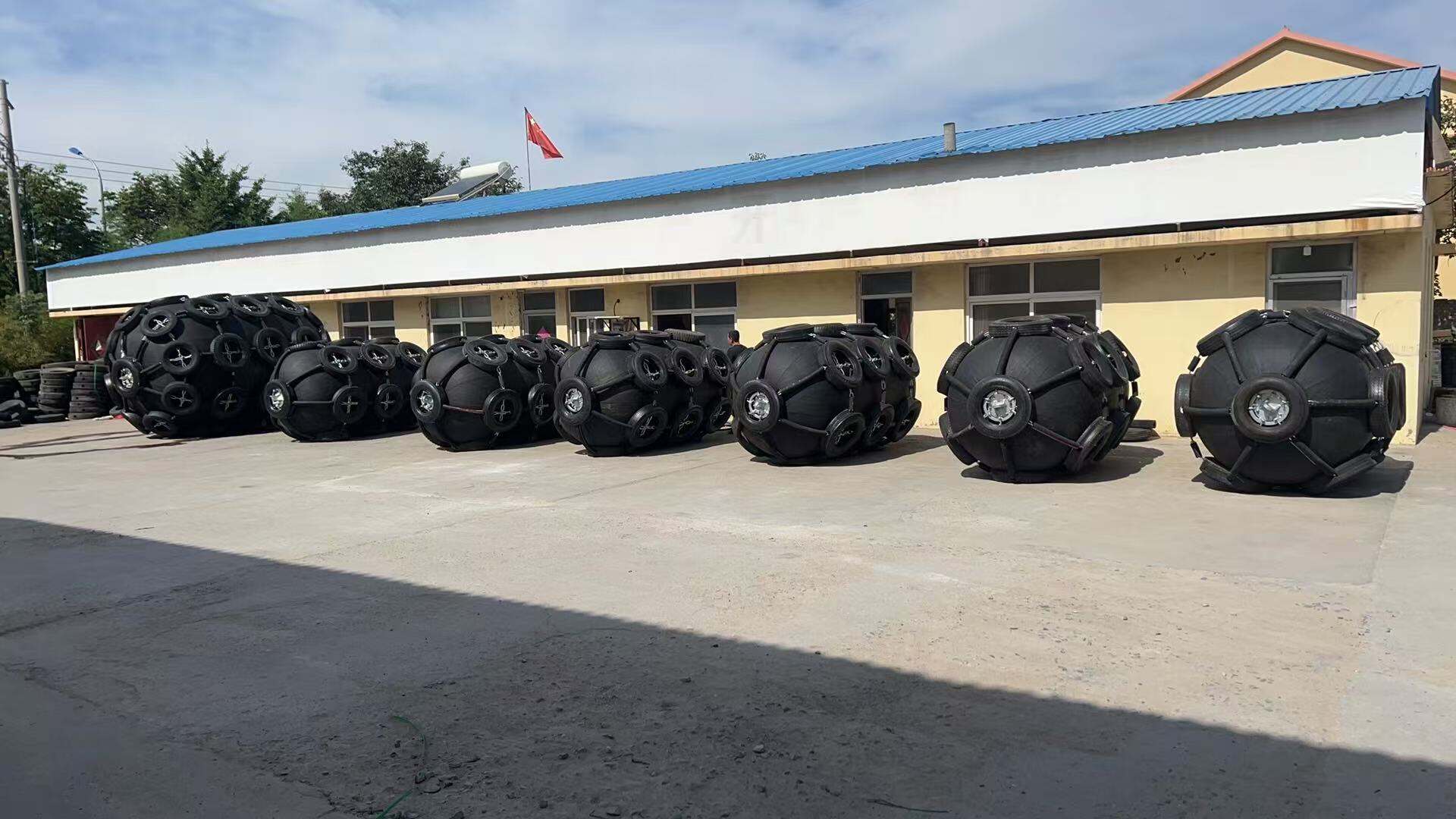
Core Working Principle: How Pneumatic Rubber Fenders Absorb Berthing Energy
Compressible air core and reinforced elastomeric casing enable progressive, low-rebound energy absorption
When ships come alongside docks, pneumatic rubber fenders work by squeezing the air inside them to soak up all that impact force. When hit, these fenders have an air core that slowly pushes back against being squashed. At the same time, their outer layer stays strong thanks to special reinforcing materials woven throughout. This combination lets them grab around two thirds of the energy when compressed halfway, which beats what regular solid rubber can do. What makes them really good is how they let go of pressure gradually after impact. This means boats don't get bounced away much (less than 15% of the original force comes back), so ships stay put where they're supposed to be and the docks themselves suffer less wear and tear over time.
Physics of deflection: Pressure-volume relationship and ISO 17357-1 compliance for predictable performance
When materials get compressed, they follow what we call Boyle's Law basically P times V equals P times V again. The math works out because when space inside gets smaller during compression, the pressure builds up pretty fast. Look at it this way: if something is compressed around 30%, the pressure inside usually jumps to about three times what it was originally inflated to somewhere between 50 and 80 kilopascals. This relationship helps engineers model how much force will be generated against different amounts of deflection. Now there's this thing called ISO 17357-1 certification that makes sure everything works reliably. It sets standards for several important factors like how pressure changes with volume from 10% all the way to 60% compression, requires rubber parts to withstand at least 18 megapascals of tension before breaking, and limits how bouncy the material can be to no more than 0.20 on the rebound scale. Fenders that meet these standards stay consistent within about plus or minus 5% of what manufacturers claim, which means ships docking at ports can count on predictable forces acting on them, keeping everyone safe while meeting regulatory requirements too.
Superior Impact Protection: Pneumatic Rubber Fender Performance vs. Conventional Alternatives
4–6× higher energy absorption efficiency at 30–50% compression compared to solid rubber fenders
When it comes to absorbing energy, pneumatic rubber fenders outperform solid ones by around four to six times when compressed between thirty and fifty percent. The reason behind this? Well, they work differently because impact forces actually compress the air inside instead of just stretching the rubber material itself. And when we look at how these fenders are built, with those reinforced elastomer layers adding structural support, they can soak up about seventy percent more kinetic energy in the same space compared to traditional designs. Tests have shown these fenders maintain their performance even after over one hundred thousand compression cycles, which makes them ideal for busy ports handling everything from medium sized Panamax ships all the way up to massive VLCC tankers that carry oil across oceans.
Reduced peak reaction force minimizes hull and dock structural stress during high-energy berthing events
Pneumatic fenders cut down on those sudden impact forces by around 40 to 60 percent when compared to regular solid rubber ones during big ship berthing events. This matters a lot because it helps protect both the concrete structures and the ships themselves when conditions get rough out at sea. These fenders work differently too since they spread out the force over time instead of creating those sharp spikes we see with traditional rubber fenders. That keeps the stress on everything from reaching dangerous levels where damage might occur. According to port engineers who have made the switch, there's been about a third fewer repair jobs needed on docking areas. Part of this comes down to how these pneumatic systems handle forces more smoothly than alternatives while still meeting all the necessary safety standards like ISO 17357-1. Ships can come and go without causing as much wear and tear, which means money saved in maintenance costs and less downtime for operations overall.
Operational Reliability: Deployment, Durability, and Adaptability of Pneumatic Rubber Fenders
Lightweight handling, corrosion resistance, and seamless integration across vessel sizes (Panamax to VLCC)
Pneumatic rubber fenders offer both quick response times and lasting durability. Because they're built with hollow structures instead of being solid throughout, these fenders weigh about 40 to 60 percent less than traditional options. This makes them much easier to install without needing heavy machinery. What really stands out though is how well they hold up against harsh conditions at sea ports. The outer layer fights off saltwater damage, doesn't break down under sunlight exposure, and keeps marine organisms from sticking to it. All these features mean they work across different sizes too. We see smaller versions around 50 tons used for medium sized ships called Panamax vessels, while bigger ones weighing up to 200 tons are specially made for those massive oil tankers known as VLCCs. Despite their size differences, every model still absorbs impact energy effectively when needed most.
Real-time pressure monitoring and maintenance best practices to prevent over-compression failure
Regular maintenance can push equipment lifespan well past the 15 year mark. The installation of real time pressure sensors makes it possible to monitor air cores continuously while they're in operation. This helps stop serious damage caused by over compression when deflection exceeds 60%. Maintenance should involve checking for signs of wear like abrasions or ozone cracks every three months. Pressure needs recalibration right before busy shipping periods too. And whenever pressure drops below 20% of what's specified, the system should be deflated immediately. Many port facilities have adopted these methods and seen their unexpected downtime drop by around 70%, based on our own maintenance logs and observations across different locations.
Proven Port Infrastructure Impact: Case Evidence of Enhanced Ship-Dock Protection
Port of Rotterdam LNG terminal retrofit: 37% reduction in fender replacement frequency and zero hull damage incidents
After installing pneumatic rubber fenders, the Port of Rotterdam's LNG terminal saw real improvements in performance. Before these new fenders were put in place, the old system needed replacing roughly every year and a half because ships kept causing cracks and deformations from repeated impacts. But things changed after the retrofit. For two whole years following installation, they only had to replace the fenders about 37% less often than before. The reason? These new rubber fenders spread out the force evenly across their surface instead of letting pressure build up in one spot. Something else worth noting: despite handling more than 150 LNG carrier arrivals each year, there wasn't a single incident of hull damage during this period. Tests according to ISO standards showed that even when compressed halfway, these fenders still absorbed energy well while reducing those sharp spikes in force. All this means lower repair bills and no unexpected stoppages for something so vital to operations.
FAQ Section
What is the main advantage of pneumatic rubber fenders over solid ones?
Pneumatic rubber fenders can absorb four to six times more energy than solid rubber fenders when compressed between 30-50%. This higher efficiency helps reduce the impact on both ships and docks.
How do pneumatic rubber fenders comply with ISO 17357-1 standards?
These fenders must meet specific requirements on pressure-volume relationships, tension endurance, and rebound characteristics as defined by ISO 17357-1, ensuring reliable performance and safety.
Why is regular maintenance of pneumatic fenders important?
Regular checks and real-time pressure monitoring prevent over-compression failure, extending the fender's lifespan and reducing unexpected downtimes.
What has been the impact of pneumatic rubber fenders at the Port of Rotterdam?
Since installation, the frequency of fender replacement has reduced by 37%, and there have been zero incidents of hull damage, indicating enhanced protection for ships and infrastructure.
Table of Contents
- Core Working Principle: How Pneumatic Rubber Fenders Absorb Berthing Energy
- Superior Impact Protection: Pneumatic Rubber Fender Performance vs. Conventional Alternatives
- Operational Reliability: Deployment, Durability, and Adaptability of Pneumatic Rubber Fenders
- Proven Port Infrastructure Impact: Case Evidence of Enhanced Ship-Dock Protection
- FAQ Section