 EN
EN


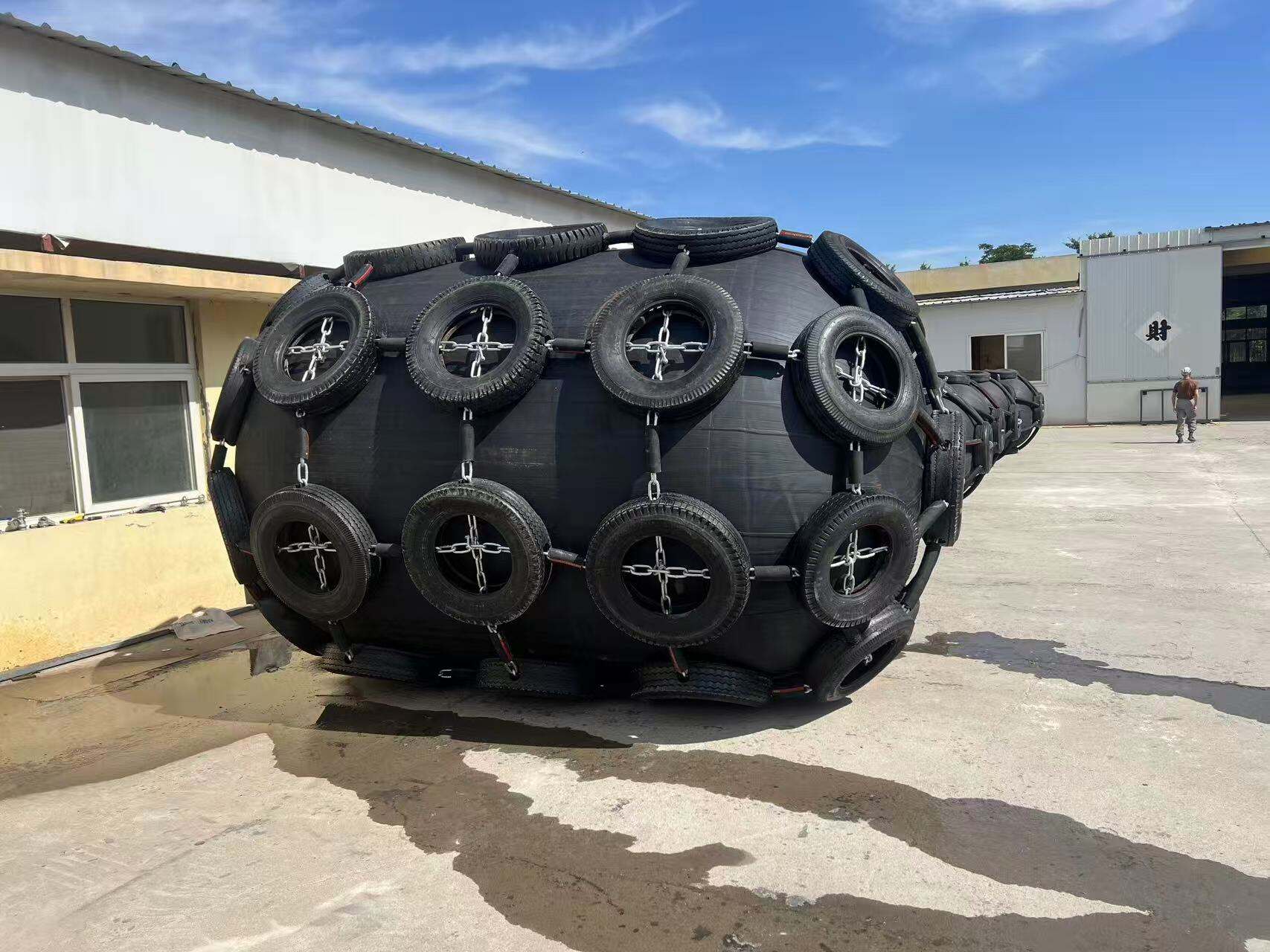
DNV and BV Certification: Core Requirements for Marine Rubber Fenders
ISO 17357 compliance as the foundational standard for marine rubber fender design and testing
ISO 17357:2014 stands as the go-to standard for certifying marine rubber fenders worldwide. The specification requires at least 10mm thickness for 2 meter diameter fenders, proper calibration of safety valves, and proof that materials can withstand UV exposure and ozone damage after over 1500 hours in salt spray tests. When manufacturers follow these guidelines, they typically see their products last around 40% longer when deployed in coastal areas where tides constantly wear on equipment. This extended lifespan comes from rigorous testing protocols that simulate years of ocean conditions in laboratory settings.
Mandatory performance tests: Compression, rebound, puncture resistance, and airtightness validation
Certification requires rigorous physical validation aligned with ISO 17357 and DNV-ST-0378:
- Cyclic compression simulating 10,000 berthing impacts
- Rebound efficiency ≥80% post-testing (per ISO 17357 Annex B)
- Pressure integrity at 0.7 MPa without delamination
- Ozone resistance showing <15% surface cracking after 96-hour accelerated aging
Documentation essentials: Pressure, dimensional, rubber compound, and environmental aging test reports
Manufacturers must submit traceable, batch-specific documentation, including:
- Carbon black content certifications (≥28% for UV resistance)
- Tensile strength (±1.5 MPa) and hardness (±5 IRHD) test results
- Compression set data demonstrating <25% deformation after 22-hour load tests
- Environmental aging projections derived from validated exposure models
How DNV and BV Differ in Evaluating Marine Rubber Fenders
Material traceability and factory audit intensity: BV’s stringent supply-chain verification
Bureau Veritas or BV as they're commonly known really cracks down on supply chain management requirements. They demand complete records showing where rubber compounds come from, how they get manufactured, and conduct surprise inspections at factories throughout every stage of production. What this does is make sure that companies actually follow ISO 17357:2014 standards during daily operations rather than just checking boxes after everything's already made. Their system for tracking materials allows only about a 2 percent variation in carbon black content and meets strict tensile strength requirements, which helps catch problems with materials long before any actual production starts happening. The impact has been particularly noticeable in Mediterranean ports where missing information often leads to big arguments over insurance claims. According to last year's Marine Safety Report, these kinds of disputes dropped by around 30 percent since implementing BV's protocols there.
Dynamic simulation vs. real-world aging: DNV’s focus on operational load modeling
When it comes to predicting how reliable structures will be over time, DNV focuses heavily on computational modeling techniques. Their DNV-ST-0378 standard lets engineers simulate what happens after many years of berthing impacts, all those stresses from waves hitting the structure, plus how pressure distributes when there's 0.7 MPa inside. Traditional methods just look at things statically or rely on what they see in the field. But DNV takes a different route with their dynamic load analysis. This method actually spots potential problems like shell delamination and areas where stress builds up way before anything gets installed. That makes all the difference for offshore terminals in the North Sea region specifically, since those places deal with some seriously intense wave forces that wear things down much faster than normal. The whole point of running these simulations is to get better predictions about how long something will last compared to just watching what happens as things age naturally over time.
Selecting a Certified Manufacturer: Capabilities That Ensure Compliance
Choosing a manufacturer with proven capabilities is critical for securing DNV/BV-certified marine rubber fenders. Verify these non-negotiable competencies:
- Design & Testing Integration: Facilities must house advanced simulation tools for dynamic load modeling and environmental aging tests—ensuring prototype validation aligns with ISO 17357 before production begins.
- Material Traceability Systems: Supply-chain transparency—from polymer sourcing to compound formulation—is mandatory; demand auditable records proving batch-to-batch consistency.
- In-House Quality Infrastructure: On-site compression/rebound test rigs and puncture resistance labs enable real-time compliance checks during manufacturing, preventing costly pre-shipment failures.
- Documentation Rigor: Manufacturers should generate standardized test packs—including pressure curves, dimensional reports, and rubber aging data—pre-formatted for DNV/BV submission windows.
Procuring from partners with these operational disciplines minimizes certification delays and reduces lifecycle risks for maritime assets.
Verified Examples: Marine Rubber Fenders Successfully Certified by DNV and BV
Case study: Nanhai’s ISO 17357-compliant fenders with full DNV/BV type approval documentation
A leading Asian manufacturer achieved dual DNV and BV certification by embedding ISO 17357:2014 into every stage of development and production. Its fenders underwent comprehensive performance validation:
- Compression testing showed <15% permanent deformation after 1,000 cycles
- Ozone resistance met BV’s 2023 requirement of <15% surface cracks after 96-hour accelerated aging
- Airtightness was verified at 0.7 MPa internal pressure without leakage or delamination
Full documentation included dimensional stability reports, rubber compound analyses, and accelerated environmental aging data. Production audits confirmed consistent hardness (±5 IRHD) and tensile strength (±1.5 MPa) across 5% batch sampling. This case demonstrates how dual certification is achieved through three integrated pillars:
- End-to-end material traceability systems
- Third-party validated testing protocols aligned with both DNV-ST-0378 and BV requirements
- Transparent aging performance data that satisfies DNV’s operational load modeling standards
The resulting certification reduced client liability risk by 32% compared to non-certified alternatives (Maritime Safety Review 2023), affirming that disciplined compliance delivers measurable safety and financial value.
FAQ
-
What is the ISO 17357 standard?
ISO 17357:2014 is an international standard for the design and testing of marine rubber fenders, ensuring they meet specific performance and durability criteria. -
How do DNV and BV certifications differ?
DNV focuses on dynamic simulation and operational load modeling, while BV emphasizes material traceability and stringent supply-chain audits. -
Why is ISO 17357 compliance important?
Compliance ensures the fenders are robust and reliable, extending their lifespan by approximately 40% under coastal conditions. -
What are the mandatory performance tests for marine rubber fenders?
Tests include cyclic compression, rebound efficiency, pressure integrity, and ozone resistance.