 EN
EN


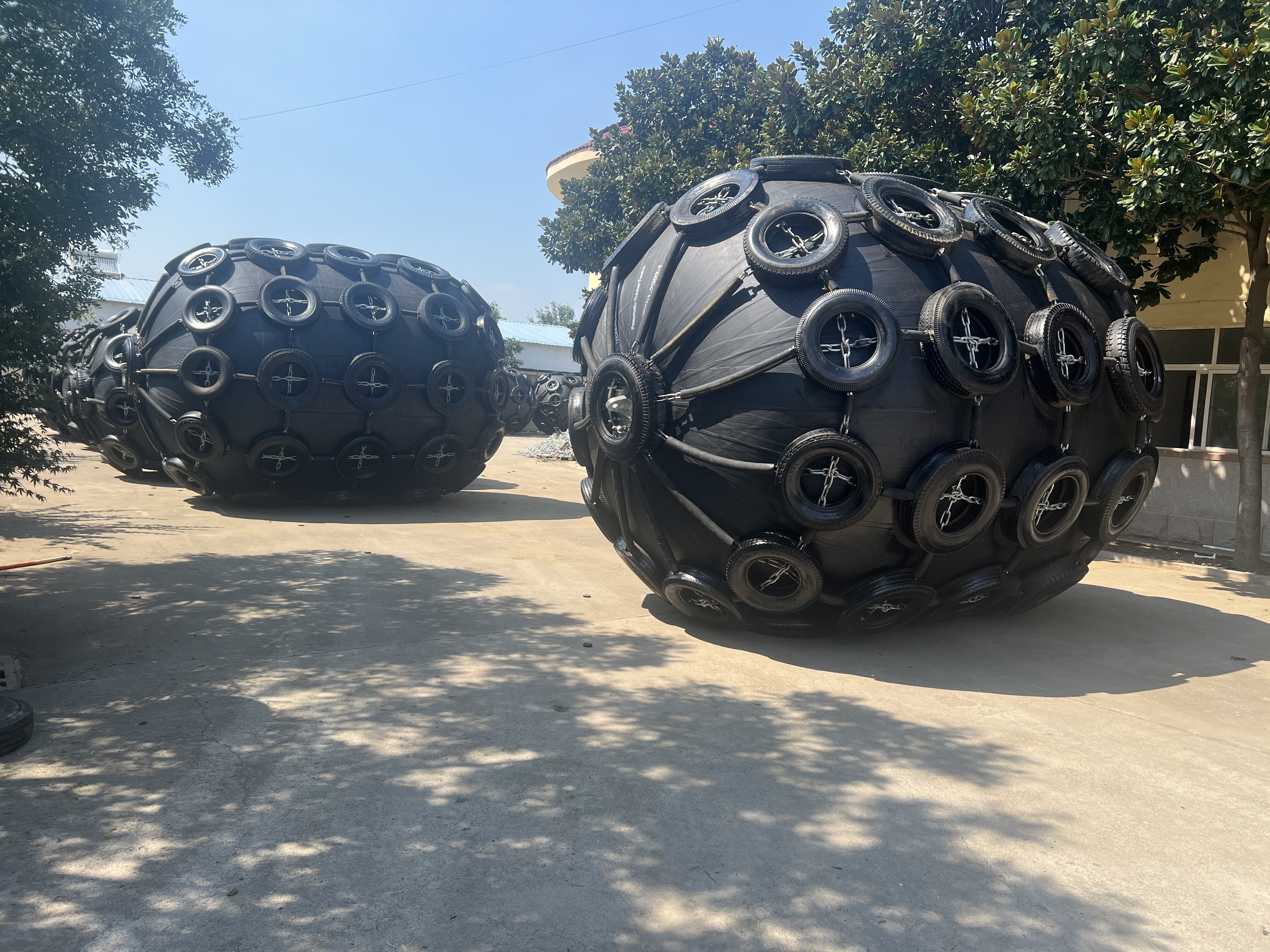
ISO 17357 Compliance: Core Requirements for Pneumatic Rubber Fender Performance
Overview of ISO 17357-1:2014 for High-Pressure Pneumatic Fenders
ISO 17357-1:2014 sets out pretty strict rules when it comes to designing, selecting materials, and testing high pressure pneumatic rubber fenders that work at pressures over 0.5 MPa. Basically, these rubber buffers need to hold together even when ships slam into docks with massive force. To hit those tight specs manufacturers have to stick to specific dimensions - usually within plus or minus 3% on both diameter and length measurements. They achieve this by mixing special reinforced rubber formulas and employing careful vulcanization methods during production. Getting these details right ensures the fenders perform reliably across different maritime conditions without failing unexpectedly.
Key Requirements in ISO 17357-2:2014 for Low-Pressure Pneumatic Fenders
ISO 17357-2:2014 applies to low-pressure fenders (≤0.3 MPa), commonly used in coastal and inland port applications. Essential performance criteria include a minimum energy absorption of 50 kNm per meter length, reaction force limits aligned with vessel displacement, and puncture resistance when subjected to 25 mm steel protrusions at 60% compression.
Differences Between ISO 17357-1 and ISO 17357-2 Compliance Frameworks
| Parameter | ISO 17357-1 (High-Pressure) | ISO 17357-2 (Low-Pressure) |
|---|---|---|
| Operating Pressure | ≥0.5 MPa | ≤0.3 MPa |
| Typical Application | Offshore platforms | Inland ports |
| Compression Cycles | 2,500 cycles minimum | 1,500 cycles minimum |
Energy Absorption and Reaction Force Specifications Under ISO 17357
Energy absorption scales proportionally with fender size, as verified through ISO-certified compression tests simulating 60% deflection at 0.1 m/s:
| Fender Diameter (mm) | Energy Absorption Range (kNm) | Reaction Force Limit (kN) |
|---|---|---|
| 1,000 | 30–45 | 180–220 |
| 2,000 | 150–180 | 550–600 |
| 3,000 | 400–450 | 1,200–1,300 |
These values reflect standardized test conditions ensuring reliable comparison across products.
Case Study: ISO 17357 Certification Process for a Floating Pneumatic Rubber Fender System
A 2023 certification audit for a 2.5m-diameter floating fender system followed three key phases:
- Design Validation: Finite element analysis confirmed even stress distribution at 65% compression.
- Prototype Testing: The unit endured 3,000 compression cycles with less than 5% permanent deformation.
- Production Audit: Batch testing verified rubber hardness (65±5 Shore A) and tensile strength (≥18 MPa).
The full process spanned 14 months, underscoring the standard's focus on long-term durability and lifecycle reliability.
Design, Materials, and Manufacturing Aligned with International Marine Safety Standards
Design principles aligned with international marine safety standards
Compliant fenders use tapered geometries to evenly distribute berthing forces while maintaining ±5% dimensional accuracy. Designers optimize energy absorption to exceed 60% of rated capacity at 55° compression angles—consistent with PIANC 2002 guidance for high-traffic terminals.
Material selection and structural integrity in compliance with ISO 17357
High-strength synthetic rubber with 50–60 Shore A hardness forms the core structure, reinforced with polyester cords capable of withstanding 2,500 kN/m tensile stress. UV-resistant outer layers preserve elasticity across extreme temperatures (-30°C to +70°C), preventing cold cracking in arctic environments.
Integration of BSI PAS 2070:2021 performance and safety requirements
BSI PAS 2070:2021 enhances safety for fender systems near LNG facilities by requiring flame-retardant additives that reduce smoke density by 40% during combustion. This complements ISO 17357 through mandatory 12-month chemical stability testing, 5,000-cycle abrasion simulations, and third-party verification of material traceability.
Manufacturing process controls under ISO 9001 quality management systems
Automated vulcanization ensures ±2°C temperature control, promoting uniform cross-linking. Every production batch undergoes laser-based dimensional inspection, with statistical process control (SPC) monitoring tensile strength variance (limited to <15%). Full documentation—from raw material certifications to final load-test reports—ensures end-to-end compliance.
Testing Protocols for Validating Pneumatic Rubber Fender Performance
Compression, Puncture, and Rebound Testing for Marine Fender Performance
Fenders are tested up to 70% deflection using hydraulic systems that simulate impacts exceeding 2 MJ. Puncture resistance is evaluated against steel protrusions, while rebound recovery rates are measured to ensure they remain within the 85–92% range specified in ISO 17357-2:2014.
Air-Tightness and Long-Term Pressure Retention Testing Protocols
Manufacturers perform 72-hour pressure decay tests with a maximum allowable loss of 3%, followed by 60-day monitoring. Advanced sensors detect micro-leakage (<0.05 bar/week), confirming suitability for offshore installations where maintenance access is limited.
Energy Absorption and Durability Testing Under Simulated Berthing Conditions
Test rigs replicate real-world conditions including tidal fluctuations and berthing velocities up to 2.5 m/s. Protocols involve over 5,000 compression cycles at 55°C, real-time energy dissipation tracking, and shear force measurement during oblique impacts to validate dynamic performance.
Weather Resistance and Environmental Aging Tests for Offshore Applications
Accelerated aging includes 2,000+ hours of UV-B exposure, salt spray equivalent to 15 years of marine service, and thermal cycling between -30°C and +65°C. These tests verify long-term resilience in harsh offshore environments.
Controversy Analysis: Variability in Test Results Across Certification Bodies
A 2023 cross-certification study found an 18% variation in reported energy absorption values among major classification societies, highlighting the need for greater harmonization in ISO 17357 test methodologies.
Third-Party Certification and Global Recognition in Marine Fender Compliance
Role of Classification Societies Like ABS, DNV, LR, BV, and CCS in Compliance
Classification societies—including ABS, DNV, Lloyd's Register, Bureau Veritas, and CCS—enforce technical benchmarks through design reviews and factory audits. They verify that materials, manufacturing, and performance align with ISO 17357. For instance, DNV mandates annual compression testing to confirm alignment with terminal-specific berthing energy calculations.
Quality Assurance Through Third-Party Certifications (ABS, LR, BV, SG, CCS)
Independent certification from recognized bodies provides objective validation of compliance. Manufacturers holding ABS, LR, or BV certification experience 30% fewer non-compliance incidents during port inspections (NSF International 2023). The process includes chemical analysis for ozone resistance, tidal condition simulations, and traceability audits of production records.
Factory Audits and Ongoing Production Surveillance for ISO 17357 Compliance
Manufacturers with ISO 9001 certification keep their processes under close watch, tracking things like how heat affects rubber during vulcanization and making sure the right mix ratios are maintained throughout production runs. These companies also deal with surprise visits from outside auditors who check where materials come from, look at when machines were last calibrated, and review what gets done when something goes wrong with a batch. The whole system works pretty well too most get through their second audit without issues around 18 to 24 months later. And it doesn't stop there suppliers working on parts for these certified makers also face similar scrutiny, helping maintain quality standards all along the way from factory floor to finished product.
PIANC Guidelines and Future Trends Shaping Pneumatic Rubber Fender Standards
Alignment of Pneumatic Rubber Fenders with PIANC 2002 Berthing Facility Guidelines
Modern fenders comply with PIANC 2002 by delivering energy absorption between 450–1,800 kJ/m³ and limiting reaction forces to ≤0.45 MN at 50% compression. Proper fender spacing—set at 10–15% of vessel length—and angular deflection limits (35° max) prevent structural buckling, especially critical for Panamax-class vessels over 366 meters in length.
Case Study: Fender System Design for a Deep-Water Terminal Using PIANC Recommendations
A 2023 terminal expansion in Southeast Asia applied PIANC’s energy formula:E = 0.5 × DWT × V² / g, where DWT = 200,000 tons and V = 0.08 m/s.
| Parameter | PIANC Recommendation | Project Implementation |
|---|---|---|
| Fender spacing | 12.5m | 12.2m |
| Energy absorption | 1,240 kJ | 1,318 kJ |
| Reaction force at 55% | ≤0.6 MN | 0.58 MN |
This compliant design reduced berthing impact forces by 22% compared to prior non-standardized installations.
Trend Analysis: Increasing Adoption of PIANC Standards in Port Infrastructure
The Maritime Standards Watch 2023 report found that about two thirds of all new port projects in 2023 followed PIANC guidelines, which marks a 14 percent jump from where things stood back in 2020. What's grabbing attention these days? Ports need to handle extreme weather conditions ranging from minus 30 degrees Celsius right up to plus 60. There's also growing emphasis on how well structures hold up when ships tilt at around 15 degree angles, plus proving materials can last half a century while only degrading by roughly twelve percent. Most interestingly, recent industry polls indicate nearly all marine engineers are turning towards PIANC approved fender systems for vital facilities such as liquefied natural gas terminals and those supporting offshore wind farms. This shift suggests real momentum behind standardized approaches in maritime construction.
FAQ
What is ISO 17357?
ISO 17357 is an international standard that specifies the performance and safety requirements for pneumatic rubber fenders used in marine environments to protect vessels and port facilities.
Why are pneumatic rubber fenders important?
Pneumatic rubber fenders are crucial for preventing damage during berthing operations by absorbing energy and reducing reaction forces when ships dock.
What are the differences between high-pressure and low-pressure fenders?
High-pressure fenders operate at pressures over 0.5 MPa and are suited for offshore platforms, while low-pressure fenders work at pressures up to 0.3 MPa and are typically used in inland ports.
How does ISO 17357 ensure fender reliability?
ISO 17357 mandates specific design, material, and testing criteria to ensure fenders perform reliably and have long-term durability across various maritime conditions.
How do PIANC guidelines influence fender standards?
PIANC guidelines provide recommendations for fender spacing, energy absorption, and reaction force limits, which are integrated into modern fender designs to meet the demands of high-traffic terminals.
Table of Contents
-
ISO 17357 Compliance: Core Requirements for Pneumatic Rubber Fender Performance
- Overview of ISO 17357-1:2014 for High-Pressure Pneumatic Fenders
- Key Requirements in ISO 17357-2:2014 for Low-Pressure Pneumatic Fenders
- Differences Between ISO 17357-1 and ISO 17357-2 Compliance Frameworks
- Energy Absorption and Reaction Force Specifications Under ISO 17357
- Case Study: ISO 17357 Certification Process for a Floating Pneumatic Rubber Fender System
- Design, Materials, and Manufacturing Aligned with International Marine Safety Standards
-
Testing Protocols for Validating Pneumatic Rubber Fender Performance
- Compression, Puncture, and Rebound Testing for Marine Fender Performance
- Air-Tightness and Long-Term Pressure Retention Testing Protocols
- Energy Absorption and Durability Testing Under Simulated Berthing Conditions
- Weather Resistance and Environmental Aging Tests for Offshore Applications
- Controversy Analysis: Variability in Test Results Across Certification Bodies
- Third-Party Certification and Global Recognition in Marine Fender Compliance
- PIANC Guidelines and Future Trends Shaping Pneumatic Rubber Fender Standards
- FAQ