 EN
EN


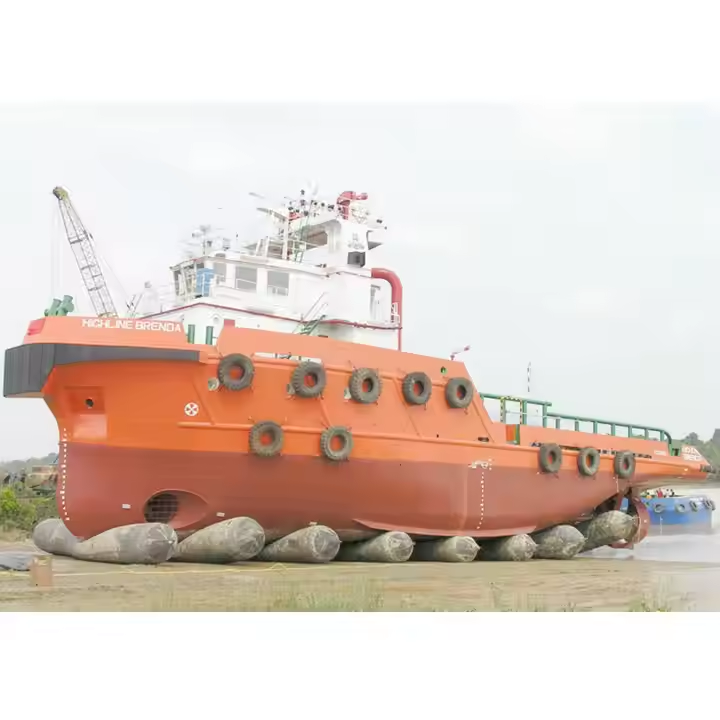
Understanding International Standards and Third-Party Certifications
Compliance with ISO 14409, ISO 17682, and CB/T 3837 for Quality Assurance
When it comes to ship launching airbags, there are several key international standards they need to follow. We're talking about things like ISO 14409 for ship launching systems, ISO 17682 covering marine lifting gear, and CB/T 3837 which specifically addresses airbag specs. These standards aren't just paperwork requirements either. They set out important details about how airbags should be designed, how weight needs to be distributed across them, and what safety margins are acceptable during operation. Take ISO 14409 as an example. This standard requires airbags to handle those sudden pressure spikes when a ship moves from land to water. According to Marine Safety Review from last year, certified airbags can cut deformation risks by around 37% compared to cheaper alternatives that don't meet these specs.
Importance of Rubber Material Standards (ISO 37, ISO 7619-1) in Performance
Ship launching airbags really rely on good quality rubber compounds to work properly. Industry experts look at two main standards when evaluating these materials ISO 37 for measuring tensile strength and ISO 7619-1 for checking hardness levels. The best marine grade rubbers can stay elastic even when temperatures drop below minus 20 degrees Celsius, something regular materials just cant handle. These specialized compounds also fight off ozone damage about half better than what we typically see in standard products. For anyone working with vessels that need to be launched in different conditions, this kind of performance makes all the difference during those tricky moments when tides change or the boat needs to be positioned at odd angles.
Role of Certifications from BV, CCS, LR, and ABS in Verifying Reliability
When it comes to safety standards, independent checks from major classification societies like Bureau Veritas (BV), China Classification Society (CCS), Lloyd's Register (LR), and American Bureau of Shipping (ABS) confirm these airbags really stand up to tough requirements. Take ABS certification as an example case study. Their tests show certified units can handle more than 200 pressure cycles underwater without so much as a single drop leaking out, even when pushed to 1.5 times their normal operating pressure. The difference between third party validation and companies certifying their own products matters a lot too. Studies indicate defects occur roughly 61% less frequently with properly verified equipment versus those that just claim compliance on their own.
| Certification Body | Key Focus Area | Testing Protocol Duration |
|---|---|---|
| BV | Burst pressure thresholds | 14-21 days |
| CCS | Cold-temperature performance | 10-18 days |
| LR | Seawater corrosion resistance | 20-28 days |
How Certified Designs Reduce Operational Risks During Ship Launching
Airbags that meet certification standards can really cut down on launch failures thanks to their engineered approach and quality checks that leave a paper trail. Designs approved by ABS typically feature extra reinforcement where stress builds up most, which helps prevent punctures. Real world data shows these improvements reduce puncture problems by around 82% for ships bigger than 5,000 deadweight tons. Following international standards makes life easier when dealing with insurance companies and warranty issues too. Certified products come with all the paperwork needed for inspections, so manufacturers don't get stuck waiting for approvals during critical operations.
Matching Ship Launching Airbag Size and Ply Count to Vessel Requirements
Matching Airbag Capacity to Vessel Weight, Length, and Hull Design
Selecting the right airbag requires precise alignment with vessel characteristics. For ships over 5,000 DWT, airbag diameters typically range between 2–3 meters, whereas vessels under 1,000 DWT usually require 1–1.5 meter units. Leading manufacturers offer customizable lengths from 1m to 32m to match hull curvature and ensure even load distribution.
Determining Optimal Diameter, Length, and Bearing Capacity (QP, QG, QS)
Three key metrics guide capacity selection:
- QP (Quasi-Static Pressure): Ranges from 10–40 ton/m for typical launches
- QG (Dynamic Load Capacity): Set 30% above QP to accommodate tidal shifts
- QS (Safety Threshold): Requires a minimum 2.5:1 burst-to-working pressure ratio
A 2023 analysis by maritime engineering experts indicates over 76% of launch failures result from mismatched QP values relative to hull contact area, underscoring the importance of accurate application of the F = P × S formula.
Ply Count Selection: Balancing Durability and Flexibility for Safe Launches
Higher ply counts (6+ layers) deliver tensile strengths of 220–350 MPa, ideal for heavy vessels, though they reduce inflation uniformity by 18–25%. Mid-sized ships (500–3,000 DWT) perform best with 4–6 ply configurations, maintaining optimal deformation ranges of 0.94–1.2m during launch operations.
Avoiding Over-Engineering vs. Ensuring Cost-Effective Sizing Strategies
Industry data shows 43% of operators oversize airbags by 20–35%, increasing per-launch costs by $12k–$18k without enhancing safety. A strategic, tiered approach based on vessel block coefficient (Cb) avoids unnecessary specifications while preserving compliance with ISO 14409 safety margins.
Calculating the Number of Ship Launching Airbags for Safe Load Distribution
Lifting Capacity Calculation Principle (F = P × S): Contact Area and Deformation
Force generation follows a basic formula where Force equals Pressure multiplied by Surface area. When it comes to lifting capacity, two main factors matter most: how much pressure builds up inside (we'll call that P) and the actual surface area that makes contact (let's name this S). Look at what happens when airbags expand under a hull structure. The bags stretch out and flatten as they fill with air, which actually increases their contact width by somewhere around 40% compared to their normal size. Getting this deformation right isn't just academic stuff either. Proper modeling of these changes is absolutely critical if anyone wants to plan loads safely. Without understanding exactly how much those surfaces expand during operation, whole systems could fail under unexpected stress conditions.
| Variable | Impact on Capacity | Optimal Range |
|---|---|---|
| Working Pressure (P) | Directly proportional to lifting force | 0.08–0.12 MPa |
| Deformed Width (S) | Increases with vessel weight | 1.2–1.6× nominal diameter |
Determining Total Airbag Quantity for Uniform Load Support
To calculate required airbag quantity, use the formula N = K₁ × (Q × g) / (Cₐ × R × Lₐ), where:
- Q = Vessel displacement (tons)
- Cₐ = Hull block coefficient (typically 0.65–0.85 for cargo vessels)
- R = Line load capacity per airbag (85–140 kN/m)
Projects involving 1,000–10,000 DWT vessels generally need 10–24 airbags. For example, a 5,000-ton bulk carrier requires 14–16 units spaced no more than 6 meters apart to prevent structural stress or hull deformation.
Incorporating Safety Factors to Prevent Under-Sizing
When making these calculations, engineers should always build in a safety factor (K₁) around 1.2 or higher. This accounts for those tricky dynamic tidal forces that can push weights up by 15 to 20 percent over static measurements. Slipway friction varies quite a bit too, with coefficients ranging between 0.02 and 0.12 depending on conditions. Manufacturing tolerances are another consideration at about plus or minus 5%. Many leading shipyards actually install anywhere from 2 to 4 extra airbags beyond what's strictly required. This simple addition cuts down on deflection stress by roughly 18 to 22%, which helps avoid disastrous failures during operations. The best part? These additional measures typically only add 3 to 5% to overall project costs, making them a smart investment for long term reliability without breaking the bank.
Evaluating Material Composition and Structural Integrity of Airbags
High-Strength Synthetic Tire-Cord Layers for Pressure Resistance
Reliable ship launching airbags rely on layered construction using high-strength synthetic tire cords made from nylon or polyester. These reinforcements evenly distribute internal pressure and maintain structural integrity under extreme conditions. Tested designs sustain working pressures up to 0.3 MPa while retaining flexibility crucial for controlled launches.
Rubber Compound Quality: Abrasion, Ozone, and Seawater Resistance
Rubber compounds meeting ISO 37 standards provide superior abrasion resistance and long-term durability in marine environments. Ozone-resistant formulations extend service life by 30–50% in tropical regions. In controlled seawater immersion tests, top-tier compounds retain 95% of their original tensile strength after 1,000 hours—directly contributing to launch reliability.
Performance Benchmarks: Working Pressure vs. Burst Pressure
Per ISO 17682, certified airbags must achieve a minimum 3:1 burst-to-working pressure ratio. An airbag rated for 0.25 MPa must therefore withstand at least 0.75 MPa before failure. This margin accommodates dynamic stresses during vessel descent and prevents sudden ruptures.
Key Material Property Comparison:
| Property | Minimum Standard | Industry Benchmark |
|---|---|---|
| Tensile Strength | ≥15 MPa (ISO 37) | 18–22 MPa |
| Abrasion Resistance | ≤150 mm³ (ISO 4649) | 90–120 mm³ |
| Ozone Crack Resistance | No cracks (ISO 1431-1) | 500+ hours at 50 pphm |
Manufacturers combining robust materials with strict quality assurance achieve service lifespans of 10–15 years, even under frequent launch cycles.
Inspection, Maintenance, and Lifespan Optimization of Ship Launching Airbags
Proper care of ship launching airbags enhances safety and extends asset longevity. Well-structured maintenance practices are vital across marine construction operations.
Routine Inspection Protocols for Wear, Leaks, and Structural Integrity
Quarterly visual checks are essential for spotting things like surface wear, ozone cracks forming on rubber components, or damage along seams where parts connect. When it comes to pressure tests, running them at 1.25 times the normal operating pressure can catch those tiny leaks before they become big problems. About three quarters of all airbag failures actually start with these microscopic fractures that go unnoticed during routine checks according to research published in Reliability Engineering & System Safety back in 2019. For tracking equipment health over time, having standard checklists makes sense when combined with condition monitoring approaches. These tools help spot patterns in wear rates so replacement schedules can be planned ahead instead of waiting until something breaks down unexpectedly.
Proper Storage and Handling to Extend Service Life
Store airbags flat on wooden pallets in shaded, temperature-controlled areas below 40°C/104°F. Avoid folding radial-ply constructions, as improper coiling increases ply separation risk by 60%. Clean only with pH-neutral solutions to prevent hydrolysis-induced rubber degradation.
Expected Lifespan Under Varying Operational Conditions
Airbags typically last 8–15 launches, depending on vessel size and slipway gradient. At tidal launch sites, rotate units quarterly to balance environmental exposure. Implementing strain monitoring via embedded RFID tags enables predictive maintenance, reducing unexpected failures by 92% in high-volume shipyards.
FAQ
What are the key international standards for ship launching airbags?
The key international standards for ship launching airbags include ISO 14409, ISO 17682, and CB/T 3837. These standards cover aspects such as design, weight distribution, and safety margins.
Why are rubber material standards important for the performance of airbags?
Rubber material standards like ISO 37 and ISO 7619-1 are crucial as they measure tensile strength and hardness, ensuring that the airbags remain elastic under various conditions and resist ozone damage.
How do certifications from BV, CCS, LR, and ABS impact airbag reliability?
Certifications from organizations like BV, CCS, LR, and ABS verify that the airbags can withstand pressure cycles and other tough requirements, reducing defect occurrence by about 61% compared to non-verified equipment.
How can certified airbag designs reduce operational risks?
Certified airbag designs feature reinforcements that prevent punctures and reduce launch failures, cutting puncture problems by 82% for larger ships and easing compliance with insurance and warranty inspections.
What factors must be considered when matching airbag size and ply count to vessel requirements?
Factors include vessel weight, length, hull design, and specific metrics like QP, QG, and QS that guide capacity selection, ensuring optimal performance and cost-efficiency.
Table of Contents
- Understanding International Standards and Third-Party Certifications
- Matching Ship Launching Airbag Size and Ply Count to Vessel Requirements
- Matching Airbag Capacity to Vessel Weight, Length, and Hull Design
- Determining Optimal Diameter, Length, and Bearing Capacity (QP, QG, QS)
- Ply Count Selection: Balancing Durability and Flexibility for Safe Launches
- Avoiding Over-Engineering vs. Ensuring Cost-Effective Sizing Strategies
- Calculating the Number of Ship Launching Airbags for Safe Load Distribution
- Evaluating Material Composition and Structural Integrity of Airbags
- Inspection, Maintenance, and Lifespan Optimization of Ship Launching Airbags