 EN
EN


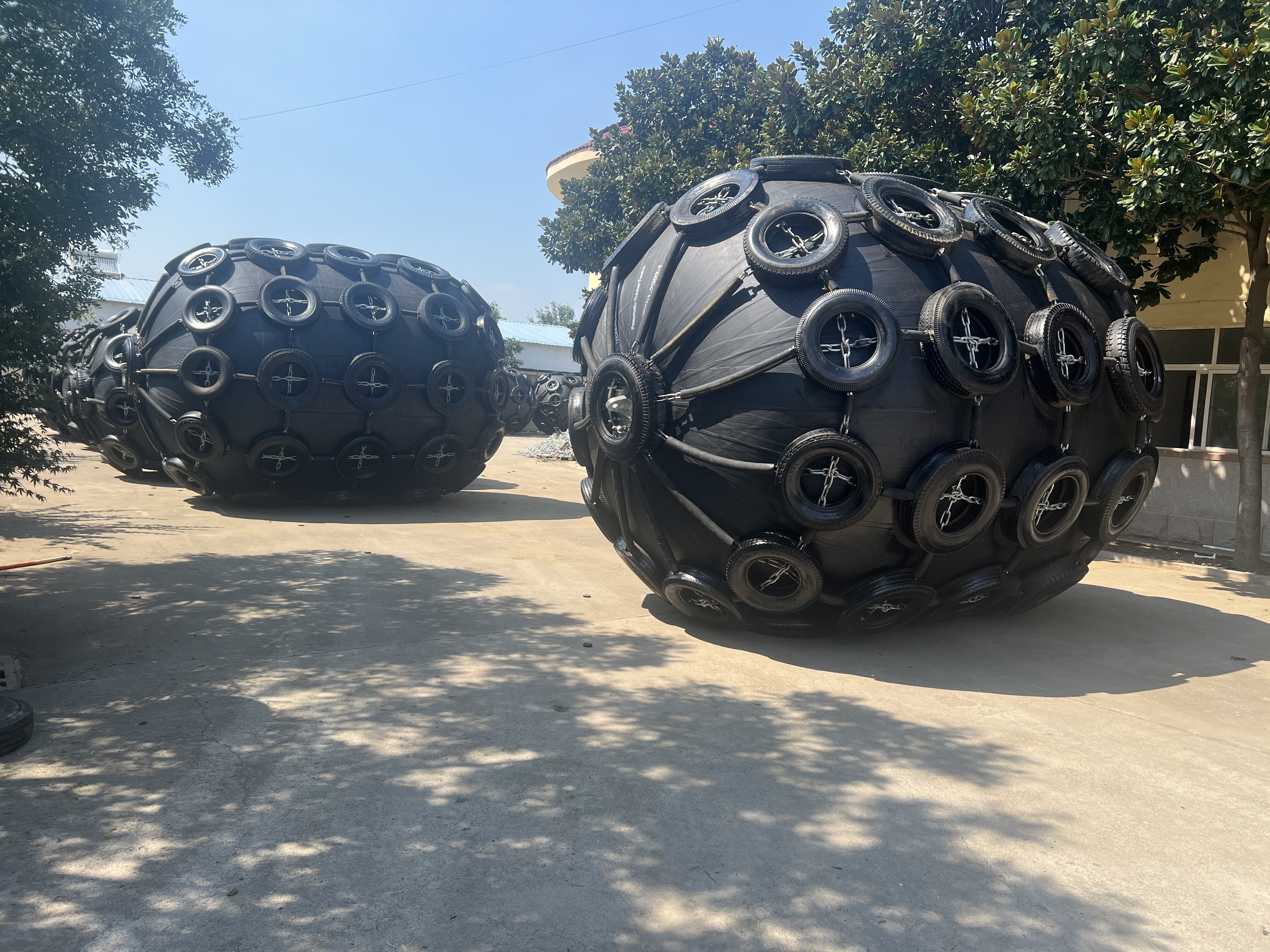
ISO 17357 Compliance: The Foundation of Pneumatic Rubber Fender Certification
ISO 17357-1:2014 Certification and Its Significance in Marine Safety
The ISO 17357-1:2014 standard establishes important performance requirements for pneumatic rubber fenders. It mandates the use of synthetic tire cord reinforcement and demands at least 97 percent rebound efficiency following multiple compressions. When these specs are met, ships experience reduced impact forces by as much as 60 percent compared to older models that don't comply, which goes a long way toward preventing accidents at sea according to research from Ponemon in 2023. The energy absorption standards actually match up well with OCIMF's mooring recommendations, creating consistent safety protocols across offshore activities. Because of this alignment, fenders tend to work better during those unpredictable moments when vessels come alongside docks or terminals.
Differences Between High-Pressure and Low-Pressure Pneumatic Fenders Under ISO 17357
High-pressure fenders (P80 class) operate at 80 kPa for heavy-duty offshore applications, while low-pressure variants (P50 class) use 50 kPa for sheltered port environments.
| Feature | High-Pressure (P80) | Low-Pressure (P50) |
|---|---|---|
| Impact Resistance | 12–18 kJ/m² | 6–9 kJ/m² |
| Compression Cycles | 200,000+ | 100,000 |
| Deployment Depth | ≤ 50 m | ≤ 30 m |
This distinction allows operators to match fender performance to site-specific wave action, vessel size, and tidal variation.
Testing Protocols for Energy Absorption, Compression, and Rebound Performance
Certification under ISO 17357-1:2014 mandates rigorous testing:
- 50% compression under 50 kN force (per ASTM D575)
- 200,000+ fatigue cycles without structural degradation
- Retention of rebound efficiency after 48-hour salt spray exposure
These protocols validate long-term resilience in harsh marine environments, ensuring consistent energy dissipation over the fender’s service life.
Puncture Resistance and Air-Tightness Requirements in ISO-Certified Fenders
Air leakage must remain below 2.5% over 24 hours—achievable only with 14-ply synthetic reinforcement and fully vulcanized seams. Third-party verification of material integrity reduces failure rates by 83% in extreme Arctic conditions (DNV GL 2023), underscoring the importance of manufacturing precision in maintaining operational reliability.
Controversy Analysis: Variability in Interpretation of ISO 17357 Across Manufacturers
Disputes persist regarding:
- Use of nylon versus polyester cord layers
- Tolerance for compressed thickness variance (±8% permitted)
- Acceptability of alternative vulcanization methods (hot vs. cold cure)
Leading manufacturers address these inconsistencies through transparent third-party certification and digital traceability systems that log every material batch and pressure test result, enhancing accountability and quality control.
Alignment with Key International Standards: OCIMF, PIANC, and BSI PAS 2070
Role of OCIMF guidelines in offshore mooring and fender selection
The Oil Companies International Marine Forum (OCIMF) establishes essential performance criteria for pneumatic rubber fenders in offshore energy operations. Their 2022 Mooring Equipment Guidelines require 60–70% energy absorption efficiency during berthing, a threshold that eliminates 43% of non-compliant fenders in high-stress marine environments according to maritime safety audits. By emphasizing progressive compression characteristics, OCIMF standards help prevent snap-back incidents in tidal zones, significantly improving crew and asset safety.
PIANC 2002 recommendations for port and terminal fender systems
PIANC's 2002 guidelines define performance expectations for fenders in cargo terminals, mandating a minimum 55% reduction in reaction force compared to rigid structures. A 2023 PIANC case study found compliant systems reduce annual wharf repair costs by $18k per berth through optimized force dissipation. These benefits are especially valuable in high-traffic ports handling large vessels such as Panamax-class container ships.
BSI PAS 2070:2021 compliance and its impact on UK and EU marine infrastructure
BSI PAS 2070:2021 introduces lifecycle assessment requirements affecting 78% of UK port operators surveyed in 2024. The standard mandates 25-year durability guarantees for rubber compounds, driving adoption of triple-layer UV-resistant materials. Compliance now accounts for 35% of tender evaluation criteria in EU-funded port modernization projects, making it a strategic priority for infrastructure developers.
Comparative analysis: How ISO 17357 and PAS 2070 overlap and diverge
Both standards require 500-cycle compression testing and align on puncture resistance thresholds (15 kN/mm²), creating a harmonized baseline for global manufacturers. However, PAS 2070 imposes stricter climate-specific benchmarks, including 94% air retention after 72-hour salt spray exposure (BS EN ISO 9227), exceeding ISO 17357’s 90% requirement. These enhancements make PAS 2070 particularly relevant for northern European and coastal installations facing prolonged corrosive conditions.
Third-Party Certification by Classification Societies and Manufacturer Traceability
Verification Role of ABS, LR, BV, CCS, and SGS in Pneumatic Rubber Fender Approval
The major classification societies like ABS, LR, BV, CCS, and SGS all work to ensure companies follow ISO 17357-1:2014 standards through their own version of a three step check system. First they look at the basic design specs such as pressure ratings and material hardness measurements. Then comes validation of how things are actually made in production, checking stuff like vulcanization temps and how long materials need to cure properly. Finally there are real world stress tests conducted in the field. Take Bureau Veritas for instance. Their requirements specify that rubber fenders must still absorb around 92 percent of their original impact energy even after being compressed 100 thousand times between freezing cold (-20 degrees Celsius) and hot summer temperatures (+40C). The difference is pretty significant when looking at actual results too. Ships that use independently certified fenders tend to have about half as many docking incidents compared to vessels that just go with whatever their own internal testing says is good enough.
Case Study: BV-Certified Fenders in North Sea Offshore Terminals
A Norwegian oil terminal’s 2022 upgrade specified BV-approved pneumatic fenders meeting PAS 2070:2021 sustainability criteria. The selected model underwent:
- Design Phase: Finite Element Analysis confirming ≤ 1.8 MPa stress at 60% compression
- Material Traceability: Rubber compound audits verifying ASTM D2000 M4AA 717 specifications
- Operational Testing: 72-hour salt spray exposure simulating 15 years of service
Post-installation monitoring revealed 12% higher rebound efficiency than non-certified units during winter storm events, validating the value of integrated certification.
Importance of Manufacturer Certifications and Traceability
The best manufacturers out there are pairing ISO 9001 quality systems with those EN 10204 3.1 material certs to track everything throughout the product life cycle. According to some research done last year, around three quarters of port managers actually care a lot about getting digital access to all those production records. We're talking stuff like tracking specific polymer batches right through to when they get inspected at the end of the line. When companies have this kind of visibility into their supply chain, it makes dealing with regulators much easier during audits. Plus, if something goes wrong somewhere down the line, figuring out what happened becomes way faster than trying to dig through paper trails.
Material Durability and Structural Design for Long-Term Performance
Triple-layer construction and ASTM D412-certified rubber specifications
Modern pneumatic fenders utilize triple-layer construction with ASTM D412-certified rubber to achieve tear strength exceeding 30 MPa. The inner carcass layer ensures structural stability, the middle anti-abrasion layer resists wear from repeated berthing, and the outer layer incorporates UV-stabilized compounds proven in ISO 188:2022 accelerated aging tests to retain 85% elasticity after 15 years of marine exposure.
Steel flange integration and mechanical durability under repeated impact
Flanges constructed with ≤ 10mm steel plates withstand over 50,000 load cycles in independent testing—40% more than non-reinforced alternatives. Reinforcement strategies from the 2024 Structural Integrity Report show angled bolt hole patterns reduce stress concentration by 27% compared to radial layouts, significantly extending service life in high-impact zones.
Environmental resistance to UV, salt spray, ozone, and temperature aging (ISO 188)
PAS 2070:2021-compliant formulations enhance environmental resilience through chlorobutyl rubber inner liners (limiting air loss to 0.05% per year), 12% carbon black additives for UV protection, and ozone-resistant outer layers rated for -40°C to +70°C operation. These features ensure reliable performance in both tropical and polar climates.
Pressure Ratings (P50 and P80) and Safety Mechanisms in Modern Fenders
P80-rated fenders include a 15% safety margin above nominal pressure, with emergency relief valves activating at 1.3x design limits. Integrated IoT-based pressure monitoring alerts operators when compression exceeds ISO 17357-1:2014 thresholds by ≤ 5%, reducing catastrophic failure risk by 63% according to marine industry data.
FAQ
What is ISO 17357-1:2014 certification?
ISO 17357-1:2014 certification ensures pneumatic rubber fenders meet defined performance and safety requirements. This includes specifications like the use of synthetic tire cord reinforcement and rebound efficiency.
What are the differences between P80 and P50 pneumatic fenders?
P80 high-pressure fenders are designed for heavy-duty offshore applications with a pressure of 80 kPa, while P50 low-pressure fenders are used in sheltered port environments with a pressure of 50 kPa.
Why is third-party certification important for pneumatic fenders?
Third-party certification by classification societies like BV, ABS, LR, and others provides assurance that pneumatic fenders adhere to industry standards, ensuring reliability and reducing docking incidents.
How do ISO 17357 and PAS 2070 standards align?
Both ISO 17357 and PAS 2070 standards require compression testing and align on puncture resistance thresholds, although PAS 2070 has stricter requirements for climate-specific benchmarks.
Table of Contents
-
ISO 17357 Compliance: The Foundation of Pneumatic Rubber Fender Certification
- ISO 17357-1:2014 Certification and Its Significance in Marine Safety
- Differences Between High-Pressure and Low-Pressure Pneumatic Fenders Under ISO 17357
- Testing Protocols for Energy Absorption, Compression, and Rebound Performance
- Puncture Resistance and Air-Tightness Requirements in ISO-Certified Fenders
- Controversy Analysis: Variability in Interpretation of ISO 17357 Across Manufacturers
- Alignment with Key International Standards: OCIMF, PIANC, and BSI PAS 2070
- Third-Party Certification by Classification Societies and Manufacturer Traceability
- Material Durability and Structural Design for Long-Term Performance
- FAQ