 EN
EN


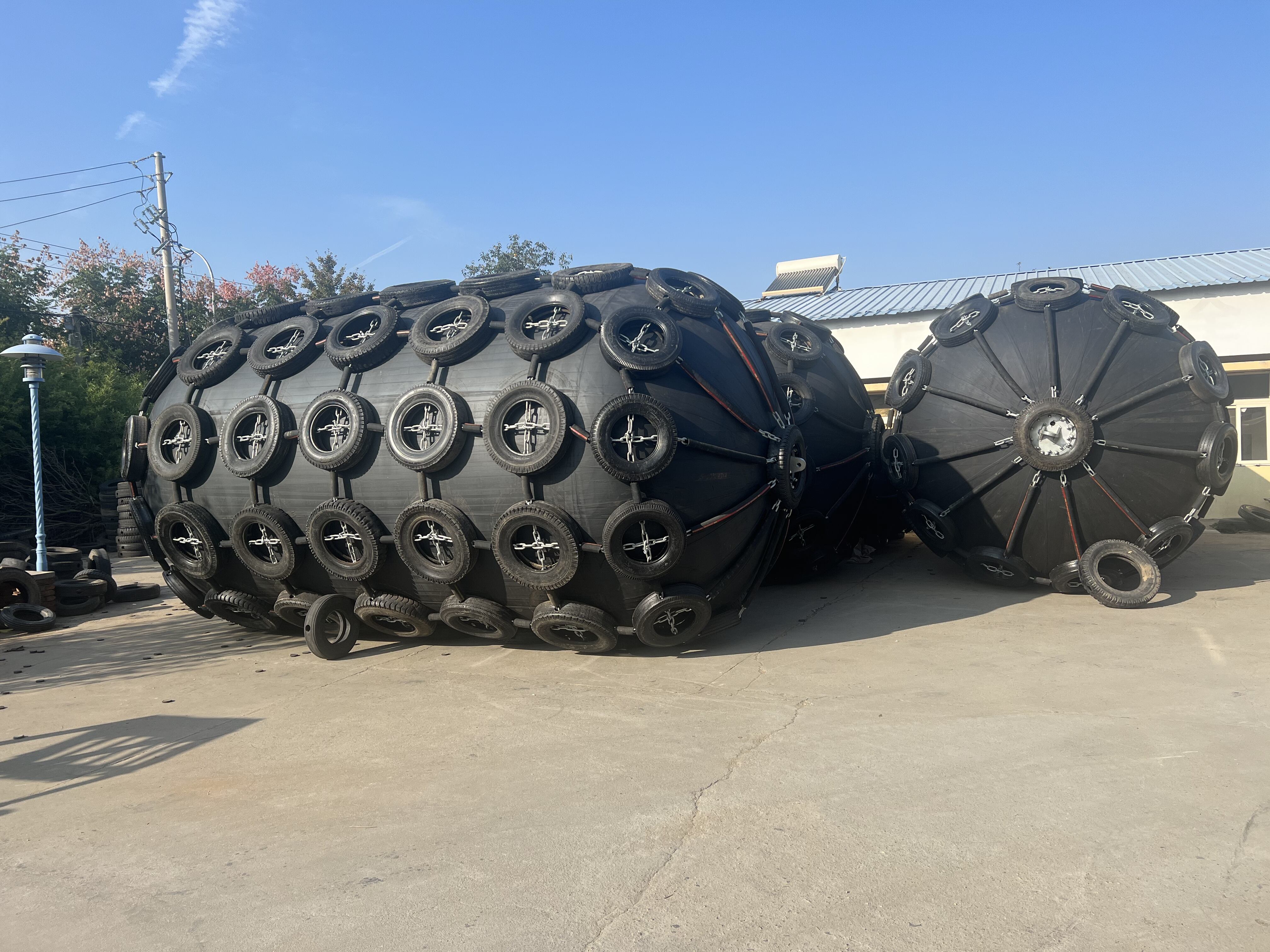
Understanding the Typical Lifespan of High-Quality Marine Rubber Fenders
Defining High-Quality Marine Rubber Fenders and Performance Standards
Marine rubber fenders of high quality are made from special materials like ozone resistant EPDM compounds, and they follow strict guidelines set out by organizations such as PIANC WG 33. The requirements include maintaining no more than 15% compression set even after going through around 100 thousand load cycles, plus needing at least 3 megapascals of tensile strength. Looking back at research from 2017 on how marine fenders age over time, it was discovered that those meeting certification standards still managed to hold onto about 94% of their ability to absorb impact energy after sitting in moderately climate conditions for twelve whole years. This kind of durability really shows just how reliable these products can be when installed properly.
Average Service Life Under Optimal Conditions: 10–15 Years and Beyond
Premium fenders typically last 15–25 years when installed with less than 2° angular misalignment and shielded from fuel or oil exposure. Ports that conduct biannual inspections and maintain berthing pressures below 0.3 MPa report that 88% of fenders exceed 15 years of service—35% better performance than installations with minimal monitoring.
Case Study: Longevity of Marine Rubber Fenders in Singapore’s Port Infrastructure
Singapore’s container terminals maximize fender lifespan through three proven strategies:
- Using ASTM D1149-compliant UV-stabilized rubber grades
- Enforcing a maximum vessel approach speed of 0.25 m/s
- Replacing fenders at 80% residual energy capacity
These practices extend service life to 18–22 years—40% longer than the global average of 13 years for high-traffic ports.
Trend: Increasing Design Life Expectancy Due to Advances in Rubber Technology
Innovations in nano-silica additives and peroxide curing systems have improved thermal aging resistance by 60% over conventional sulfur-cured rubbers. As a result, manufacturers now offer 30-year warranties on closed-cell foam fenders for protected harbors, reflecting confidence in next-generation hybrid polymer formulations.
Key Factors Influencing the Durability of Marine Rubber Fenders
Mechanical Stress from Repeated Berthing Impacts and Load Cycles
Marine rubber fenders endure up to 1.2 million load cycles over their operational life, with each impact compressing the material by 35–70%. This repeated stress leads to internal fractures, even in high-performance compounds. Ports handling Panamax-class vessels experience 30–35% faster deterioration due to higher kinetic energy during berthing.
Berthing Frequency, Vessel Size Variability, and Operational Intensity
Daily berthing frequency significantly affects wear rates:
| Port Activity Level | Annual Wear Rate Increase |
|---|---|
| Low (<10 ships/day) | 4–6% surface erosion |
| High (>30 ships/day) | 12–18% compression cracks |
Mixed vessel operations increase wear progression by 50% due to inconsistent loading. Ports that standardize docking protocols reduce annual replacement costs by $180,000 through predictable energy absorption patterns.
Installation Accuracy and Structural Alignment Best Practices
Deflection angles exceeding 3° (ISO 17357:2022) lead to:
- 25% reduction in energy absorption
- 40% greater shearing forces at mounting points
A 2023 global port survey attributed 62% of premature failures to incorrect bolt torque or foundation corrosion. Laser-guided alignment systems now achieve 0.5 mm precision, extending service intervals by 2–3 years in tidal environments.
Material Composition and Its Role in Marine Rubber Fender Longevity
The durability of marine rubber fenders hinges on material formulation, where polymer selection and additives are balanced to resist environmental and mechanical stress while managing lifecycle costs.
High-Performance Rubber Compounds: EPDM vs. Natural Rubber
Modern fenders primarily use ethylene propylene diene monomer (EPDM) or natural rubber (NR), each suited to specific conditions:
| Property | EPDM | Natural Rubber |
|---|---|---|
| Temperature Resistance | -40°C to +120°C | -50°C to +80°C |
| UV/Ozone Resistance | Excellent (no cracking) | Moderate (requires additives) |
| Rebound Elasticity | 50%-60% | 70%-85% |
| Chemical Resistance | Acids, alkalis, solvents | Hydrocarbons, seawater |
EPDM is preferred in tropical climates for its weather resistance, while NR’s superior elasticity benefits high-impact berths requiring rapid recovery.
Additives That Enhance UV, Ozone, and Saltwater Resistance
Carbon black, antiozonants, and silica are integrated into rubber compounds to mitigate degradation. These additives reduce surface deterioration by up to 40% in accelerated aging tests, especially under equatorial sun or extreme temperature cycles.
Synthetic Blends vs. Pure Rubber: Trade-offs in Durability and Cost
Hybrid EPDM-NR blends offer a 15–20 year service life—30% longer than pure NR—at a 20% higher material cost. While pure NR remains common in budget-driven projects with lower environmental stress, synthetic blends provide better long-term value in demanding applications.
Environmental Exposure and Degradation Mechanisms in Marine Applications
UV Radiation and Ozone-Induced Cracking in Marine Rubber Fenders
Intense UV radiation breaks down polymer chains, initiating microcracks that propagate under ozone exposure. A 2025 Frontiers in Materials study showed that tropical ports with over 300 sunny days annually accelerate cracking by 40% compared to temperate zones, reducing impact absorption efficiency.
Saltwater Immersion and Electrochemical Deterioration Effects
Prolonged seawater exposure promotes galvanic corrosion at metal-rubber interfaces. Chloride ions penetrate 1.5–3 mm annually, weakening tensile strength via hydrolysis. Research in npj Materials Degradation indicates synthetic blends resist electrochemical damage 25% longer than natural rubber in tidal zone simulations.
Thermal Aging from Temperature Fluctuations and Climate Extremes
Daily temperature swings of 15–35°C in tropical regions induce thermal stress equivalent to 8–12 years of lab aging. After five years, rubber hardness increases by 12–18 IRHD, diminishing elasticity essential for effective energy absorption.
Chemical Exposure from Ship Cleaners, Fuel, and Industrial Runoff
Hydrocarbon pollutants from bunkering and antifouling coatings degrade rubber 30% faster than seawater alone. Alkaline hull cleaners (pH 10–12) accelerate hydrolysis, while heavy metals in runoff catalyze oxidation, forming brittle surface layers that compromise structural integrity.
Inspection, Maintenance, and Predictive Strategies to Extend Service Life
Proactive maintenance can extend fender service life by 40% compared to reactive approaches. Structured inspection and condition-based management enable early intervention and optimized replacement planning.
Common Deterioration Signs: Cracking, Chalking, Swelling, and Deformation
Critical indicators of degradation include:
- Surface cracking (depth >3 mm reduces energy absorption by 25%)
- Chalking (sign of UV damage that accelerates ozone attack)
- Irregular swelling (indicates fluid ingress and loss of elasticity)
- Permanent deformation (>10% shape distortion impairs load capacity)
Early detection prevents failure during critical berthing operations.
Routine Inspection Protocols Using Visual and Non-Destructive Testing Methods
Quarterly inspections should incorporate:
- Ultrasonic thickness gauges to assess material loss
- Thermal imaging to detect internal delamination
- Shore hardness testing (target: 60±5 Shore A)
Ports combining these methods reduced unplanned replacements by 37%, according to a 2023 Port Engineering Report.
Best Practices for Cleaning and Preserving Rubber Fender Integrity
Clean fenders with pH-neutral marine solutions and soft brushes to remove:
- Oil residues that promote chemical breakdown
- Barnacles causing abrasive wear
- Embedded industrial particulates
Avoid high-pressure washing (>800 psi) and solvent-based cleaners, which accelerate aging and surface cracking.
Predictive Maintenance and Condition Monitoring Systems for Ports
Leading ports deploy IoT-enabled strain sensors and machine learning models to:
- Forecast remaining service life with 89% accuracy
- Trigger alerts for excessive impact forces
- Optimize maintenance based on real-time data
Facilities using predictive maintenance strategies achieve 22% longer fender lifespans through timely, data-driven interventions.
FAQ
What are high-quality marine rubber fenders composed of?
High-quality marine rubber fenders are primarily made from ozone resistant EPDM compounds and are designed to withstand high loads with minimal compression set.
What affects the lifespan of marine rubber fenders?
The lifespan is influenced by factors such as installation accuracy, exposure to UV and ozone, saltwater immersion, thermal aging, and chemical exposure.
How often should marine rubber fenders be inspected?
Marine rubber fenders should be inspected quarterly using visual and non-destructive testing methods, such as ultrasonic thickness gauges and thermal imaging.
How do environmental conditions affect marine rubber fenders?
Intense UV radiation, saltwater immersion, and temperature fluctuations can accelerate degradation by causing microcracks, electrochemical deterioration, and thermal aging.
Table of Contents
- Understanding the Typical Lifespan of High-Quality Marine Rubber Fenders
- Key Factors Influencing the Durability of Marine Rubber Fenders
- Material Composition and Its Role in Marine Rubber Fender Longevity
- Environmental Exposure and Degradation Mechanisms in Marine Applications
- UV Radiation and Ozone-Induced Cracking in Marine Rubber Fenders
- Saltwater Immersion and Electrochemical Deterioration Effects
- Thermal Aging from Temperature Fluctuations and Climate Extremes
- Chemical Exposure from Ship Cleaners, Fuel, and Industrial Runoff
- Inspection, Maintenance, and Predictive Strategies to Extend Service Life
- FAQ