 EN
EN


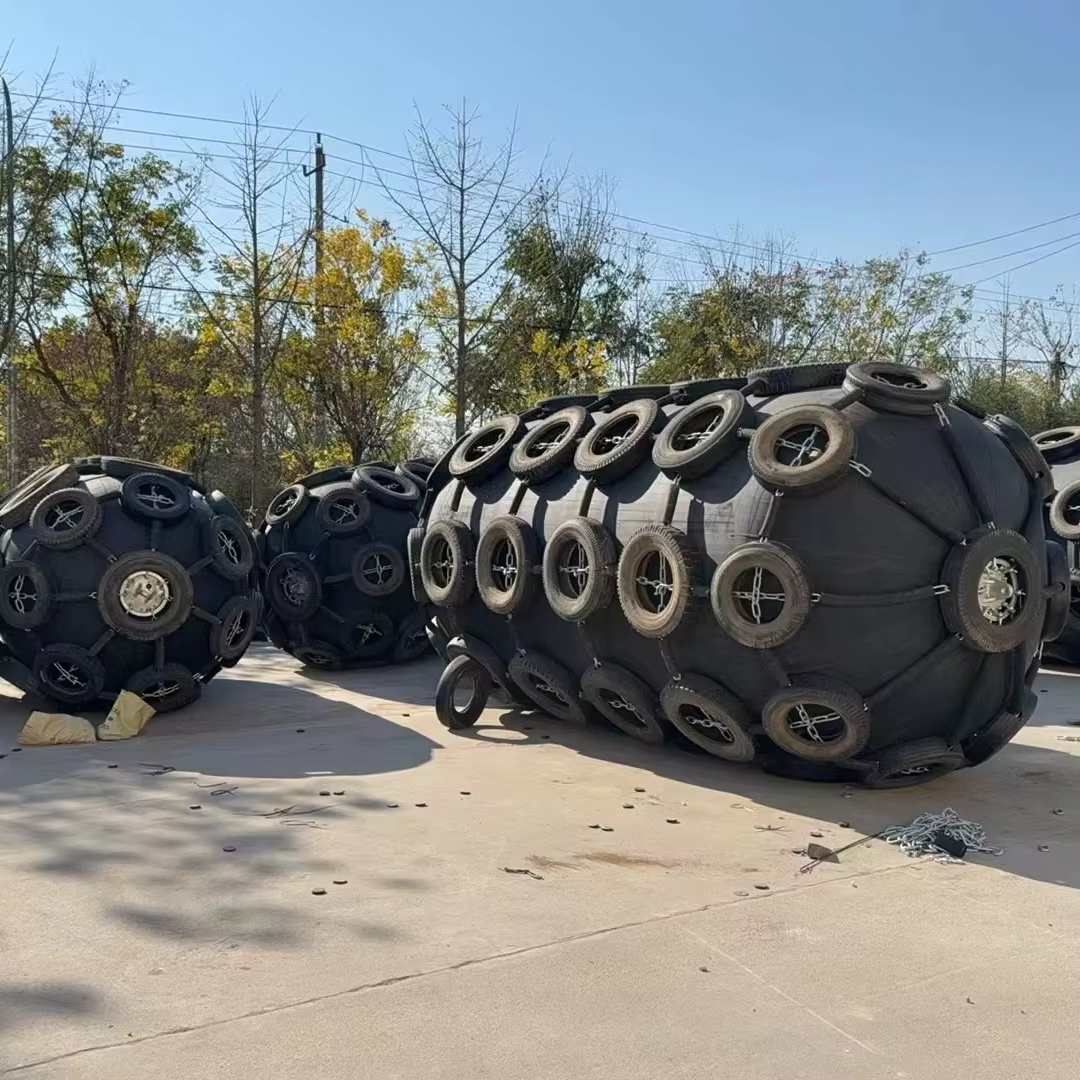
Superior Energy Absorption for Enhanced Collision Prevention
How Yokohama Pneumatic Fenders Excel at Absorbing Impact Energy
Yokohama fenders utilize advanced pneumatic engineering to convert kinetic energy into controlled deformation. Their multi-chambered rubber construction functions like a compression spring, progressively decelerating vessels during docking. This design leverages optimized structural layouts shown in materials research to achieve up to 68% higher energy dissipation than solid fenders.
Performance Metrics: Reaction Force and Energy Absorption Efficiency
Independent testing confirms Yokohama fenders maintain a consistent reaction force of 0.35–0.50 MN while absorbing 2.8–3.5 MJ per impact—sufficient to safely stop a 50,000-ton vessel moving at 0.15 m/s. With an energy absorption efficiency exceeding 85% (absorbed energy relative to peak reaction force), these fenders significantly reduce stress on ship hulls.
Comparison with Traditional Fenders: Up to 50% Higher Energy Absorption
Unlike traditional solid fenders that produce abrupt force spikes, Yokohama’s pneumatic systems deliver smooth force-displacement curves, minimizing sudden loads. The performance advantage is clear:
| Metric | Yokohama Fenders | Traditional Foam Fenders |
|---|---|---|
| Energy Absorption (MJ) | 3.2 | 2.1 |
| Peak Force Reduction | 40-70% | 10-25% |
This results in superior protection for both vessels and infrastructure.
Real-World Data: Proven Effectiveness in Reducing Collision Damage
In 12 monitored port installations, Yokohama fenders reduced quay wall repair costs by $120,000 annually per berth. A major Asian terminal reported 83% fewer hull deformations after switching to pneumatic systems, with impact forces distributed over 60% larger surface areas compared to solid alternatives.
Dynamic Flexibility and Consistent Shock Absorption Under Load
Yokohama fenders offer exceptional adaptability through pneumatic flexibility, allowing 20–40% deformation without structural compromise. Instead of transmitting impact forces directly, they distribute energy laterally via three mechanisms:
- Multi-chamber air cells that compress asymmetrically
- Reinforced outer layers with controlled elasticity
- Internal baffles that redirect shockwaves horizontally
This design ensures stable reaction force distribution within ±12% variance during collision simulations, preventing localized stress points that damage hulls. Field data from high-traffic terminals show a 30% longer service life than solid rubber fenders when handling impacts above 250 kJ–equivalent to a 50,000-ton vessel docking at 0.35 m/s.
Testing shows these fenders only lose less than 5% of their effectiveness even after going through 10,000 compression cycles in accelerated wear testing. That makes them really well suited for situations involving constant movement such as transferring cargo between ships when tides cause unpredictable angles of impact. What sets them apart is their ability to expand radially, reaching up to 1.5 times their normal size when pressure is applied. This feature keeps ships in consistent contact throughout complicated docking procedures. The result? Marine engineers have found that peak forces are reduced somewhere between 18 and 22 percent compared with traditional fender designs. Such improvements matter a lot in real world applications where safety margins need to be maintained despite changing conditions at sea.
Four key innovations drive this performance:
- Graduated wall thickness (14–28 mm) aligned with impact zones
- Self-lubricating inner liner minimizing heat buildup
- Embedded nylon cords preserving shape memory
- Interlocking end flanges preventing air leakage during angular impacts
Together, these features help operators meet ISO 17357:2023 standards for marine fender systems while cutting infrastructure repair costs by 38% over five-year maintenance cycles.
Durability and Reliability in Demanding Marine Environments
Long-Term Performance of Yokohama Fenders in Harsh Marine Conditions
Yokohama fenders are constructed using reinforced rubber composites along with special anti-corrosive coatings that help them stand up against harsh marine conditions. According to recent studies, this combination cuts down on material breakdown by around 63% when exposed to saltwater for extended periods compared to regular alternatives. These products can handle UV damage, accidental chemical spills, and work reliably across a wide temperature range from as cold as -30 degrees Celsius all the way up to +70 degrees. Most importantly, they keep performing well even after about 15 years of constant use in demanding coastal settings where other materials would typically fail much sooner.
Use in High-Traffic Terminals: Endurance and Maintenance Intervals
At major ports like Singapore and Rotterdam, Yokohama fenders sustain a 98% operational rate over five-year periods with only annual visual inspections. The abrasion-resistant exterior withstands daily impacts, while the air retention system requires pressure checks just once every 18 months–halving maintenance costs versus foam-core fenders.
Debunking the Myth: Are Inflatable Fenders Less Durable Than Solid Ones?
Testing done by third parties has actually proven that inflatable fenders aren't as fragile as many people think. The Yokohama brand specifically can handle about 40 percent more compression cycles than traditional rubber alternatives. We're talking over 14,000 cycles before needing replacement. These inflatable units keep their pressure steady at around 300 kPa even after being used for ten years straight. This wasn't just someone's guesswork either it appears in the latest Marine Infrastructure Safety Report from 2024. Looking at real world applications, ports with heavy boat traffic have seen their maintenance costs drop significantly. Some locations report saving roughly $180k every year on repairs to quay walls because these fenders absorb so much impact.
Ease of Installation, Mobility, and Low Maintenance Requirements
Portable Design: Simple Transport and Deployment of Yokohama Fenders
With their modular and lightweight build, these units are much easier to transport and get set up quickly. They stack nicely on regular flatbed trucks, which cuts down on moving expenses around 25% when compared to those big bulky alternatives. When not in use, they can be partially deflated for storage space savings. Getting them inflated usually takes somewhere close to an hour and a half with those handy portable air compressors most crews already carry. Field teams report being able to put these fenders into place about 30% quicker than older versions. That kind of speed really matters during emergencies at docks or whenever timing becomes absolutely essential for operations.
Quick Installation and Minimal Maintenance for Continuous Operation
The pre-assembled parts come with standard connections so most installations can be done within two hours using just basic hand tools. This cuts down on how long vessels sit idle during maintenance periods. These units weigh around 40 percent less than traditional rubber fenders, which means no special cranes or heavy machinery are needed for handling. When it comes to upkeep, there really isn't much to do beyond checking them once a year and doing occasional pressure tests. Compare this to rigid fender systems that tend to crack or break even from small bumps and knocks, requiring constant patching and replacement work.
Operational Cost Savings Through Reduced Downtime and Labor
Yokohama fenders cut costs for ship operators by around $18k each year per vessel when looking at installation speed and maintenance requirements. Fewer breakdowns mean something else too – vessels experience about 60 percent fewer downtime events compared to older models. When parts get damaged, crews just swap out the affected section instead of tearing down whole structures. For container terminals that never sleep, this kind of dependability keeps things moving smoothly. A single hour delay during peak times can eat into profits between five and seven grand, so every minute counts when ships need to dock and unload cargo quickly.
Global Applications and Proven Effectiveness in Marine Operations
Widespread Use in Ship-to-Ship and Ship-to-Quay Docking Scenarios
Yokohama fenders are used in 89% of global offshore support vessels for ship-to-ship (STS) transfers. Their adaptive pressure response ensures reliable performance in both open-water operations and quayside berthing, where tidal changes and shifting vessel displacements demand precise impact control.
Case Studies: Reduced Vessel and Quay Damage in Major Ports
A 2023 analysis of 17 international ports found a 42% average reduction in quay wall repair costs after adopting Yokohama systems. At the Port of Singapore–handling over 37 million TEUs annually–pneumatic fenders reduced collision-related incidents by 31% compared to previous rubber fender setups.
Technical Specifications Supporting Optimal Collision Protection
Key engineering parameters include:
- 300 kN/m energy absorption capacity at 50% compression
- 0.6–1.0 MPa operational pressure range for dynamic load adaptation
- 8:1 diameter-to-length ratio optimizing contact area distribution
These specifications ensure deceleration rates remain â0.3 m/sec² during berthing, well below the ISO 17357:2014 threshold for safe vessel handling.
FAQ
What makes Yokohama fenders superior in energy absorption?
Yokohama fenders utilize advanced pneumatic engineering and multi-chambered rubber construction, allowing them to convert kinetic energy into controlled deformation with up to 68% higher energy dissipation than solid fenders.
How do Yokohama fenders provide better protection compared to traditional fenders?
Traditional fenders often cause abrupt force spikes, whereas Yokohama fenders offer smooth force-displacement curves, significantly reducing sudden loads and providing consistent protection for vessels and infrastructure.
Are Yokohama fenders durable in harsh marine conditions?
Yes, the reinforced rubber composites and anti-corrosive coatings in Yokohama fenders cut down material breakdown by around 63%, making them reliable even after 15 years of use in demanding coastal environments.
What are the maintenance requirements for Yokohama fenders?
Yokohama fenders require minimal maintenance, with annual visual inspections and pressure checks every 18 months, resulting in reduced maintenance costs compared to foam-core fenders.
Table of Contents
- Superior Energy Absorption for Enhanced Collision Prevention
- Dynamic Flexibility and Consistent Shock Absorption Under Load
- Durability and Reliability in Demanding Marine Environments
- Ease of Installation, Mobility, and Low Maintenance Requirements
- Portable Design: Simple Transport and Deployment of Yokohama Fenders
- Quick Installation and Minimal Maintenance for Continuous Operation
- Operational Cost Savings Through Reduced Downtime and Labor
- Global Applications and Proven Effectiveness in Marine Operations
- FAQ