 EN
EN


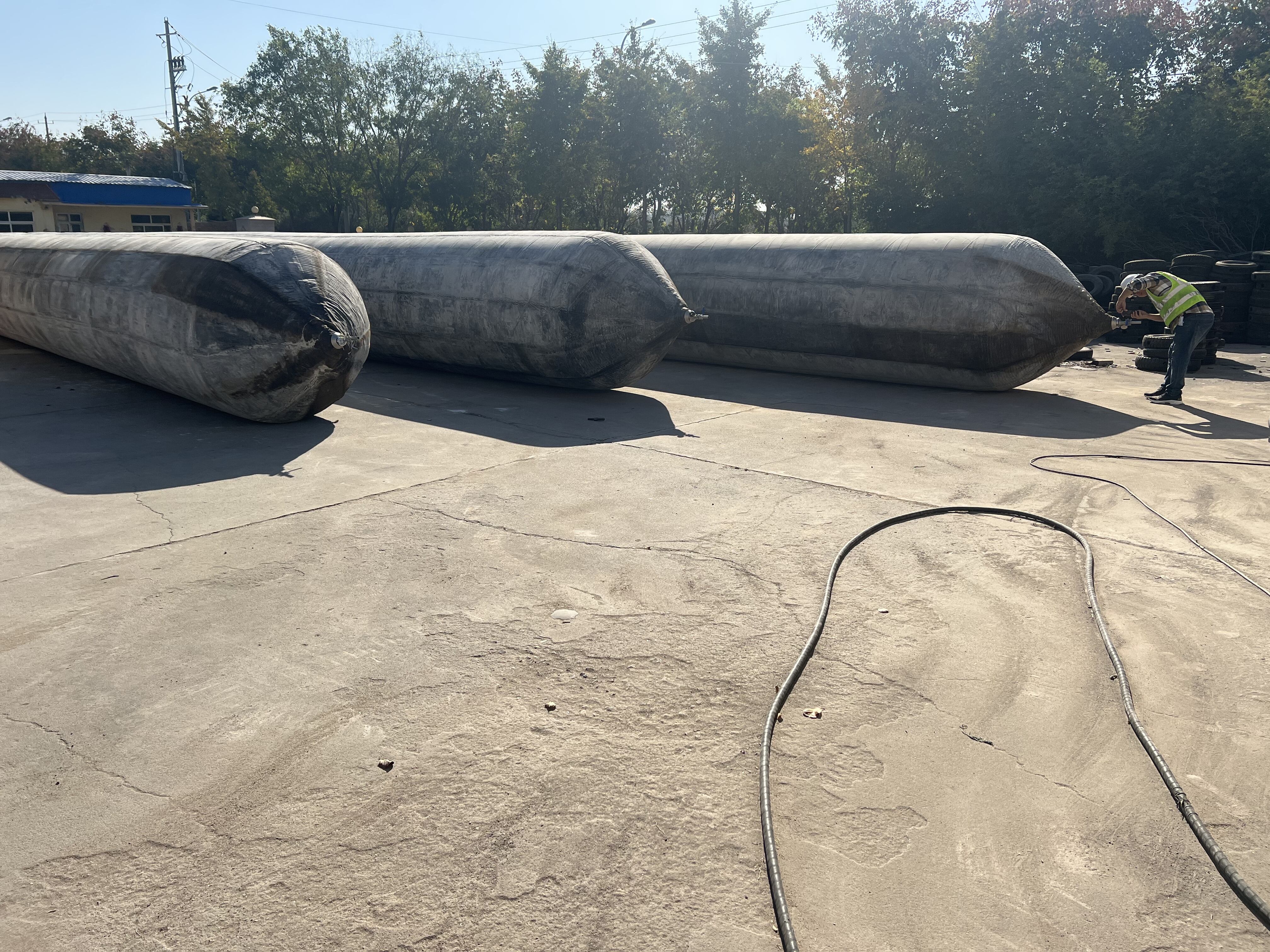
What Are Inflatable Rubber Airbags Used For in Marine Applications?
Inflatable rubber airbags serve as a mobile launch platform for ships, replacing traditional slipways and dry docks. These cylindrical devices lift vessels via controlled inflation, enabling a smooth transition from construction berths to waterways. Maritime engineers use them for:
- Launching ships up to 55,000 DWT (Deadweight Tonnage)
- Salvaging grounded or sunken vessels
- Relocating offshore structures like pontoons
Recent studies show these airbags can withstand pressures up to 0.12 MPa while supporting loads of 234 tons, making them indispensable in coastal and remote shipyards lacking permanent infrastructure.
Standard vs. Heavy-Duty Inflatable Rubber Airbags: Key Differences
| Feature | Standard Airbags | Heavy-Duty Airbags |
|---|---|---|
| Reinforcement Layers | 6–8 synthetic cord layers | 10–12 high-tensile layers |
| Max Pressure | 0.10 MPa | 0.15–0.20 MPa |
| Typical Use Cases | Small boats, barges | Large cargo ships, tankers |
Heavy-duty variants employ abrasion-resistant rubber compounds to handle sharp hull edges and uneven slipways, outperforming standard models in prolonged marine operations.
How Airbag Size and Dimensions Affect Vessel Support
Optimal airbag sizing depends on hull geometry and weight distribution:
| Vessel Size | Recommended Airbag Diameter | Length Range |
|---|---|---|
| <10,000 DWT | 0.8–1.2 m | 6–10 m |
| 10,000–30,000 DWT | 1.2–1.6 m | 10–14 m |
| >30,000 DWT | 1.6–2.0 m | 14–18 m |
Larger diameters increase contact area, reducing ground pressure by 40–60% compared to narrow designs. Synchronized multi-airbag configurations prevent hull deformation by balancing pressure across all contact points.
Data derived from maritime engineering best practices.
Load Capacity Requirements for Inflatable Rubber Airbags in Large Ship Launches
Understanding Bearing Capacity (Qp, Qg, Qs) in Inflatable Marine Airbags
Rubber inflatable airbags come in different strength categories based on how much weight they can hold up. The main types are regular duty (QP), heavy duty (QG), and extra heavy duty (QS). Each category relates to how the internal fabric layers are built. Take QS models for instance these have at least nine reinforcing layers inside which makes them capable of handling really massive weights. There are also industry rules such as ISO 14409 that set limits on how much pressure these bags can safely handle. These standards help make sure the weight gets spread out evenly when the airbag touches the bottom of ships during transport operations. Most manufacturers follow these guidelines closely to avoid structural failures during cargo transport.
Safe Working Pressure and Real-World Load Performance: 234 Tons at 0.12MPa
Modern airbags achieve 234-ton lifting capacity at 0.12MPa working pressure during vessel movement, increasing to 272 tons static capacity at 0.14MPa. This 16% pressure-load variance accounts for dynamic forces during launch, including:
- Slipway-to-water transition impacts
- Tidal current resistance
- Hull deformation adjustments
Maximum Ship Weight and DWT Supported: Up to 55,000 DWT
Properly configured airbag systems handle vessels weighing 55,000 deadweight tons (DWT), equivalent to Panamax-class bulk carriers. Critical factors include:
| Parameter | Threshold |
|---|---|
| Single airbag load | ¥40 tons/meter |
| Total system load | ¥1.3x vessel weight |
Correlation Between Airbag Load Capacity and Vessel Displacement
Displacement calculations must account for buoyancy effects during the launch phase:
Required airbag capacity = (Ship weight × Safety factor) ÷ Buoyant force
Typical safety factors range from 1.3–1.5 depending on slipway incline (4°–8° optimal) and seabed composition. Coastal clay substrates require 18% higher capacity margins than granite platforms.
Sizing and Configuration of Inflatable Rubber Airbags for Optimal Support
Proper sizing and arrangement of inflatable rubber airbags are critical for safely launching vessels up to 55,000 DWT. Recent marine engineering studies show that 78% of launch failures stem from mismatched airbag configurations, emphasizing the need for precision in both dimensions and layout.
Available Airbag Dimensions: Diameter 0.8m–2.0m and Length 6m–18m
Standardized marine airbag diameters range from 0.8 meters for narrow hulls to 2.0 meters for wide-beam vessels, with custom lengths extending to 18 meters. These parameters directly correlate with load-bearing capacity – a 1.5m-diameter airbag at 0.12MPa pressure typically supports 234 tons, while larger 2.0m models handle up to 40% greater loads.
Matching Airbag Size to Hull Geometry and Keel Contact Points
The table below illustrates recommended airbag specifications based on hull type:
| Hull Profile | Recommended Diameter | Contact Points |
|---|---|---|
| V-shaped Keel | 0.8m–1.2m | 3–5 longitudinal |
| Flat-Bottom Barge | 1.5m–2.0m | 7–9 transverse |
| Curved Coastal Vessel | 1.2m–1.5m | 5–7 staggered |
Proper matching prevents excessive point loading, which accounts for 62% of hull deformation incidents during launch operations.
Multi-Airbag Synchronization: Alignment and Pressure Balance for Large Ships
Today's launch systems rely on an ISO standard formula N equals K1 times Qg divided by C6 RL to the fourth power when figuring out how many airbags are needed. The spacing between these airbags stays within certain limits too, usually somewhere between pi D over two plus 0.3 meters and 6 kilo parameters. According to what marine engineers have been talking about since late 2023, new dual pressure monitoring tech has brought down pressure differences across whole airbag setups to just plus or minus 2%. That represents quite a jump forward compared to older control systems which had around 50% higher variance. Such tight control makes all the difference when it comes to getting massive ships off loading docks smoothly, especially those monster vessels that stretch well beyond 250 meters long where even small timing issues can cause big problems during unloading operations.
Engineering and Environmental Factors Impacting Inflatable Airbag Performance
Modern ship launching operations rely on inflatable rubber airbags to balance structural demands with environmental realities. Below we analyze four critical factors influencing performance across marine applications.
Material Composition and Structural Resilience of Inflatable Rubber Airbags
High-grade synthetic rubber blends reinforced with nylon or polyester cord layers form the foundation of durable airbags. These materials must withstand repeated compression cycles while resisting punctures, saltwater corrosion, and UV degradation. For example, coastal deployments require saltwater-resistant polymer formulations to prevent premature material fatigue.
Pressure Distribution Dynamics During the Ship Launch Phase
As vessels transition from slipway to water, airbag pressure fluctuates between 0.08 MPa (resting) and 0.15 MPa (peak load). Real-time pressure monitoring systems adjust inflation levels dynamically, ensuring consistent load distribution across contact points. This prevents localized stress concentrations that could rupture bags or damage hulls.
Slipway Angle, Ground Type, and Environmental Conditions Affecting Airbag Efficiency
| Factor | Performance Impact |
|---|---|
| Slipway gradient | Steeper angles (>1:15) increase rolling momentum, requiring tighter pressure control |
| Granular soils | Unstable ground reduces friction, necessitating wider airbag spacing |
| Wind speeds >25 km/h | Lateral forces risk vessel misalignment, demanding additional stabilization anchors |
Arctic and tropical environments require specialized rubber compounds to maintain flexibility at -30°C or resist thermal cracking at 45°C.
Tide Scheduling and Timing Considerations for Safe Large Vessel Launches
Operators synchronize launches with high-tide windows to minimize required launch distances and ground friction. Spring tides provide 20–30% greater water depth than neap cycles, significantly reducing airbag rolling resistance. Post-storm debris checks and real-time weather monitoring further mitigate collision risks during critical phases.
FAQ
1. What are inflatable rubber airbags?
Inflatable rubber airbags provide a mobile launch platform for ships, helping vessels transition from construction sites to waterways. They are also used for salvaging grounded vessels and relocating offshore structures.
2. How do airbags support large vessels?
Airbags lift vessels through controlled inflation, distributing pressure evenly to support the ship's weight during launch. They are designed to sustain pressures up to 0.12 MPa and loads as high as 234 tons.
3. What's the difference between standard and heavy-duty airbags?
Standard airbags have fewer reinforcement layers and lower pressure capacity, suitable for small boats. Heavy-duty airbags have high-tensile layers, higher pressure tolerance, and are used for large cargo ships.
4. How do environmental conditions affect airbag performance?
Factors like slipway angle, ground type, and wind speeds impact how effectively airbags perform. Specialized materials are needed for extreme environments like Arctic or tropical regions.
5. Why is precise airbag configuration critical?
Proper sizing and arrangement prevent mismatched configurations that lead to launch failures. Precision ensures balanced pressure across the vessel, reducing the risk of hull deformation.
Table of Contents
- What Are Inflatable Rubber Airbags Used For in Marine Applications?
- Standard vs. Heavy-Duty Inflatable Rubber Airbags: Key Differences
- How Airbag Size and Dimensions Affect Vessel Support
- Load Capacity Requirements for Inflatable Rubber Airbags in Large Ship Launches
- Sizing and Configuration of Inflatable Rubber Airbags for Optimal Support
- Engineering and Environmental Factors Impacting Inflatable Airbag Performance
- FAQ