 EN
EN


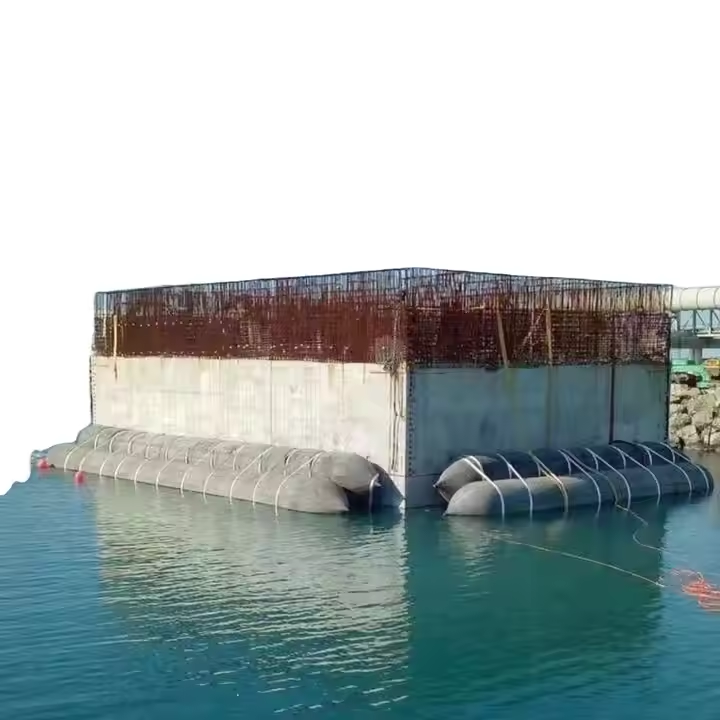
Assessing Material Quality and Durability for Ship Salvage Airbags
Salvage airbag material specifications directly determine operational success during marine emergencies. Compliance with ISO 37 (tensile strength) and ISO 7619-1 (hardness) ensures rubber layers maintain elasticity under 250+ ton loads—preventing catastrophic failure during vessel recovery.
Rubber material standards and compliance (ISO 37, ISO 7619-1)
Manufacturers must validate rubber compounds through ISO 37 tensile testing (minimum 18 MPa) and ISO 7619-1 hardness verification (60–70 Shore A). These metrics ensure structural integrity under extreme load; non-compliant materials show 68% higher rupture rates in real-world salvage operations, according to peer-reviewed maritime engineering studies.
Resistance to marine challenges: saltwater, UV exposure, and temperature extremes
High-grade synthetic rubber incorporates halogenated polymer chains to resist saltwater corrosion, while UV stabilizers meet accelerated weathering benchmarks of 5,000+ hours. Temperature tolerance from –40°C to 80°C maintains flexibility across Arctic deployments and tropical salvage—critical for consistent performance without preconditioning.
Abrasion, ozone, and seawater resistance in rubber composites
Multilayer composites integrate carbon-black reinforcement for abrasion resistance against rocky or coral-strewn seabeds, and antiozonant additives neutralize coastal ozone damage. Salt diffusion tests confirm premium composites absorb less than 0.3% seawater volume after six months’ immersion—effectively preventing internal cord degradation and delamination.
Performance metrics: buoyancy, shock absorption, and reusability
| Metric | Industry Benchmark | Failure Threshold |
|---|---|---|
| Buoyancy Efficiency | ≥2.5 t/m³ | <1.8 t/m³ |
| Shock Absorption | 40% impact reduction | <25% reduction |
| Max Reuse Cycles | 15+ operations | Degradation after 8 |
Buoyancy calculations must account for vessel displacement, seawater density (1,025 kg/m³), and pressure loss over time. Reusability hinges on post-operation pressure retention above 90% of original capacity. Materials failing these thresholds increase salvage costs by $740k per incident, per the Ponemon Institute’s 2023 maritime risk assessment.
Verifying Manufacturing Standards and International Certifications
Compliance with key international standards (ISO, DNV, ABS)
For manufacturers working in this space, showing compliance with ISO 9001 quality standards is pretty much table stakes these days. On top of that, they need those extra certifications from places like DNV GL and ABS when dealing specifically with marine salvage gear. What really matters though is getting that ISO 37 and ISO 7619-1 testing done right. These tests basically check if the rubber layers can hold up when subjected to massive forces – think over 300 tons pressing down on each airbag during actual operations. When all these standards line up properly, it means fewer breakdowns out in the field and smoother sailing through the regulatory maze in different regions around the world.
Role of classification societies: BV, CCS, LR, and ABS in reliability verification
The big names in maritime certification - Bureau Veritas (BV), China Classification Society (CCS), Lloyd's Register (LR), and American Bureau of Shipping (ABS) - handle everything from facility inspections to full blown material tests. Think hydrostatic burst trials and those long lasting cyclic pressure endurance checks. Getting their stamp of approval matters a lot when planning salvage operations deeper than 100 meters underwater. Without proper verification, those airbags used in such conditions create serious safety concerns and open up huge legal liabilities for anyone involved in these risky deep sea operations.
Understanding third-party certification and documentation authenticity
Legitimate certification requires traceable test reports from ISO/IEC 17025-accredited laboratories covering:
- Ozone resistance (>100 hours at 50 pphm concentration)
- Seawater corrosion resistance (>1 year continuous submersion)
- Buoyancy retention (>95% after five years’ dry storage)
Request original documents bearing embossed seals and QR codes linked to official verification databases. Authentic ISO 9001 certificates include unique accreditation numbers verifiable via IAF CertSearch or national accreditation bodies.
Identifying red flags: Suppliers claiming certification without proof
Exercise caution when suppliers exhibit any of the following:
- Inability to produce original test reports on accredited laboratory letterhead
- Certificates lacking model-specific test data (e.g., batch numbers, dimensions, pressure ratings)
- Refusal to permit independent facility inspections
- “Self-certification” claims absent third-party validation
- Overly broad scope statements inconsistent with technical capabilities
Per the International Marine Contractors Association’s 2022 counterfeit certification audit, uncertified airbags demonstrated a 400% higher incidence of catastrophic failure during live salvage lifts.
Evaluating Supplier Experience and Technical Support Capabilities
Key indicators of supplier credibility and industry experience
When looking for suppliers, focus on those who actually have hands-on experience with complicated marine salvage work. Ideally find ones that have spent at least ten years specifically working on designing and deploying airbags for these operations. Take time to look through their case studies, especially when they've dealt with ships larger than 5,000 gross tons. Check if things went well during actual lifts, whether pressures stayed stable throughout, and how the airbags held up after being used. Getting endorsement from organizations like ABS, LR, or DNV matters a lot too. These aren't just paper certificates hanging on the wall somewhere. Real partnerships with these groups show ongoing expertise in the field. Industry reports suggest that companies working with these kinds of suppliers tend to keep clients happy long term, around 95 percent or better. Why? Because these suppliers consistently perform well on site and fix problems quickly when they do arise.
Importance of collaboration with technical experts and proven manufacturers
Manufacturers who know what they're doing work closely with rubber compound experts to tweak the molecular makeup so their products stand up better against ozone, handle heat changes, and distribute pressure dynamically across surfaces. What this means in practice is creating custom blends that actually work in extreme conditions. Take our arctic grade formulation for example it stays flexible even when temps drop to minus 40 degrees Celsius, all while still meeting those important DNV and ISO standards nobody wants to compromise on. When companies test these materials together under real world pressures, they can confirm they'll perform reliably at capacities reaching 1,500 tons. And let's not forget the money aspect either. According to Ponemon's research from last year, every delay caused by substandard materials costs an average of 740 thousand dollars per incident. That's a lot of cash down the drain.
After-sales support, training, and global service reach
Confirm 24/7 technical assistance across high-activity salvage corridors—including Southeast Asia and the Mediterranean, which collectively handle 65% of global operations. Comprehensive support includes:
- Onsite deployment training certified by IMO-recognized centers, reducing improper usage by up to 70%
- Emergency replacement protocols with ≥48-hour response windows
- Regional maintenance hubs offering abrasion repair, cord inspection, and pressure recalibration
Suppliers lacking certified training programs or regional service infrastructure introduce avoidable operational and compliance risk—especially when salvage spans multiple flag-state jurisdictions.
Matching Airbag Design to Vessel Requirements: Size, Buoyancy, and Configuration
Airbag Size, Shape, and Configuration Based on Salvage Operations
The way these systems are set up really depends on what needs to be done operationally. Cylindrical shaped airbags work best when it comes to lifting ship hulls because they stay stable during the process. Segmented design options help stop things from sliding sideways when dealing with rough or sloped ocean floors. When trying to recover wrecks from areas full of debris, bigger diameter bags (at least two meters wide) tend to perform better since they spread out the weight and minimize pressure points on specific spots. How much space there is between the bottom of the wreck and the sea floor determines how we stack multiple units together. For deeper water salvage operations, people usually go with parallel arrangements of airbags to handle those heavy concentrations of force without risking damage to equipment or structures below.
Buoyancy Capacity and Load-Bearing Specifications
Airbags need to provide about 20 to 30 percent extra buoyancy compared to what the vessel weighs underwater. This accounts for all sorts of factors like movement in the water, possible leaks, and those important safety buffers we always talk about. When calculating how much lift an airbag can generate, engineers look at the density of seawater which is around 1,025 kilograms per cubic meter. Take an airbag that measures roughly 10 meters by 2.5 meters, it would give approximately 50 tons worth of lifting power. The materials used have to handle pressures above 0.3 megapascals because waves can create sudden bursts of force against them. Most companies test their products under these conditions using special methods outlined in standard ISO 1402 to make sure everything holds up when things get rough out there on the ocean.
Selecting Airbags Based on Ship Weight, Dimensions, and Operational Needs
Key selection factors include:
- Displacement tonnage: Sets minimum required buoyancy capacity
- Hull geometry: Flat-bottomed vessels benefit from longer, lower-profile airbags; curved hulls require conformable or segmented designs
- Environmental conditions: High-current zones demand abrasion-resistant rubber grades with reinforced cord plies
Best practice involves cross-referencing vessel blueprints with manufacturer-provided load-distribution charts to avoid localized hull stress exceeding yield thresholds.
Performance Comparison Across Different Airbag Models
| Model Type | Buoyancy Efficiency | Pressure Limit | Reusability Cycle |
|---|---|---|---|
| Standard Cylinder | 8 tonnes/m³ | 0.25 MPa | 15–20 launches |
| Reinforced Segmented | 10 tonnes/m³ | 0.35 MPa | 25–30 launches |
| High-Pressure | 6 tonnes/m³ | 0.4 MPa | 10–15 launches |
Segmented designs excel in unstable or uneven environments, while high-pressure variants suit deep salvage where external hydrostatic pressure demands greater wall integrity—despite their lower buoyancy-to-volume ratio.
FAQs
What are the most important standards for ship salvage airbags?
ISO 37 and ISO 7619-1 are critical standards for ensuring the quality and durability of rubber materials used in ship salvage airbags. Compliance with these standards ensures airbags maintain structural integrity under high stress and extreme conditions.
How do I verify the legitimacy of a supplier's certifications?
Legitimate certifications should come with traceable test reports from ISO/IEC 17025-accredited laboratories and include embossed seals or QR codes. Verify these through official certification databases like IAF CertSearch.
What are the performance metrics to consider for salvage airbags?
Key performance metrics for salvage airbags include buoyancy efficiency, shock absorption, and reusability cycles. It's essential to match these metrics with the specific operational needs and the environment in which the airbags will be used.
How should the design of airbags be matched to vessel requirements?
Airbag design should consider the vessel's weight, hull geometry, and environmental conditions. Cylindrical designs are suited for stable lifting of ship hulls, while segmented designs are better for uneven seafloors.