 EN
EN


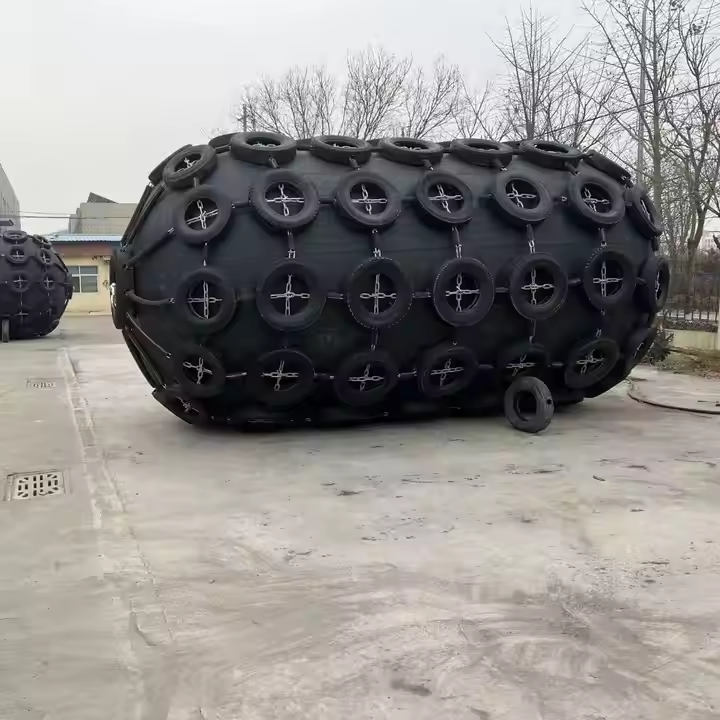
Unmatched Energy Absorption and Shock Mitigation for Modern Berthing Demands
How Yokohama pneumatic fenders dissipate high-energy impacts via controlled air compression
The Yokohama fender system works by trapping air inside tough rubber casings, which helps turn the force from ships hitting docks into heat instead of damage. When a ship pushes against these fenders during docking, the air inside gets squeezed, building up pressure bit by bit until it acts like a shock absorber for the whole process. What makes these fenders stand out compared to regular solid rubber options is how they spread the force across the entire contact area. This means boats and piers experience much less sudden stress points. Some tests at actual terminals suggest this design cuts down on maximum stress levels by around 35 to 40 percent, though results can vary depending on conditions.
Real-world validation: 38% lower reaction force vs. arch fenders at Rotterdam Euromax Terminal
At Rotterdam Euromax Terminal, Yokohama fenders recorded 38% lower maximum reaction forces than steel-reinforced arch fenders during berthing of 24,000-TEU vessels. This reduction minimizes structural wear on dock infrastructure, extends service life, and eliminates galvanic corrosion risks associated with metal-reinforced systems.
Why rising vessel size and speed make Yokohama fender energy capacity (E = ½mv²) mission-critical
Looking at the kinetic energy formula E equals half mv squared helps explain why big ships today are such a problem. Take a massive container ship carrying 24,000 TEUs just coasting along at 0.2 meters per second it packs over 1,500 kilojoules of impact energy which is actually three times what older Panamax ships had back in the day. Ship sizes have been growing steadily too around 12 percent each year since 2020 so regular fenders can only handle so much before they start failing when compressed past 60 percent. That's where Yokohama fenders come into play. These newer models keep absorbing energy even when squashed beyond 70 percent compression, which makes them pretty much necessary if ports want to manage these huge vessels without breaking their budgets or causing damage.
Engineered Durability: Resilience Against UV, Salinity, Ozone, and Thermal Stress
Patented EPDM/NR compound with UV stabilizers and salinity-resistant curing chemistry
The Yokohama fenders combine a special mix of EPDM rubber with natural rubber, plus they've got those UV stabilizers and saltwater resistant additives thrown in. What does this do? Well, basically it stops the molecules from breaking down when exposed to sun, fights off corrosion from seawater, and keeps the material from cracking due to ozone exposure. Plus, these fenders stay flexible even when temperatures swing between minus 30 degrees Celsius and plus 70 degrees. Lab tests accelerated the aging process showed something pretty impressive too – about 58 percent improvement in UV protection and around 40 percent better resistance to saltwater damage compared to regular neoprene products. So for anyone dealing with tough conditions at sea, this means longer lasting performance without compromising on quality.
Field-proven longevity: 12-year service life without core replacement at Jebel Ali Port
Jebel Ali Port has operated Yokohama fenders for over 12 years without requiring core replacements, despite handling more than 18,000 vessel berthings. Engineers reported a 73% reduction in degradation rates compared to previous installations, confirming that advanced rubber compounds significantly reduce maintenance needs and ensure reliable operation under extreme coastal conditions.
Low Total Cost of Ownership: Minimal Maintenance and Zero Corrosion Risk
All-rubber construction eliminates galvanic corrosion, bolt fatigue, and metal inspection cycles
With no embedded metal components, Yokohama fenders eliminate galvanic corrosion and bolt failures caused by cyclic loading. The seamless, all-rubber design withstands salt spray and marine biofouling, removing the need for routine inspections, rust monitoring, or torque checksâsaving over 40 labor hours annually per unit.
Lifecycle cost analysis: 62% lower 10-year maintenance spend vs. steel-reinforced alternatives
According to a recent port infrastructure study from 2024, Yokohama fenders stand out because they don't need recoating, cathodic protection work, or dealing with rust issues over time. This means maintenance costs drop significantly over ten years at around $14,800 saved per linear meter. Steel reinforced alternatives tell a different story though. These require checking with ultrasonic tests twice a year, plus replacing those sacrificial anodes which typically runs about $4,200 annually. Most will also need major structural fixes somewhere around the seven year mark. While initial investment costs are pretty much on par between these options, the long term picture shows Yokohama systems costing about 62 percent less overall when looking at all expenses throughout their lifespan.
Versatile Yokohama fender applications across port infrastructure types
Modular adaptability: Tuning YK, YM, and YP series for container terminals, LNG jetties, and Ro-Ro ramps
When looking at their options, port operators often turn to Yokohama's range of modular solutions including the YK, YM, and YP series, each designed for different berthing needs. The YK series with its cylindrical design really stands out in busy container terminals where absorbing impact is critical. For liquefied natural gas operations, the YM model comes into play because it creates less reaction force, which means fewer sparks and better safety margins during transfers. Then there's the YP series that sits low to the ground, making all the difference when maintaining proper clearance heights on those Ro-Ro ramps. Ports that switch to these adaptable systems typically save around 15% on retrofitting expenses instead of dealing with older single-profile setups according to recent industry reports.
Custom integration: Retrofitting Yokohama fenders onto aging dock faces without structural reinforcement
Yokohama fenders work great for old docks since they don't need welding or bolting, which means no extra strain on already weakened structures. The air-filled design lets them attach right onto cracked concrete surfaces without needing expensive upgrades. According to Maritime Engineering from last year, this approach typically saves around $220k on each job. Most folks who've tried these retrofits found that about 78 out of 100 cases didn't require any changes to the existing structure at all, yet still performed just as well as brand new installations would have.
FAQ
What are Yokohama fenders made of?
Yokohama fenders are made from a combination of tough rubber casings filled with air. They include specialized compounds like EPDM and natural rubber, along with UV stabilizers and saltwater-resistant additives.
How do Yokohama fenders distribute impact forces?
Yokohama fenders distribute impact forces through controlled air compression within the rubber casings, which dissipates energy uniformly across the contact area, reducing sudden stress points.
What makes Yokohama fenders suitable for large vessels?
Yokohama fenders can absorb high impact energies due to increased compression capacity, making them ideal for handling large vessels with rising size and speed.
How do they minimize maintenance needs?
Because Yokohama fenders comprise an all-rubber construction without embedded metal components, they eliminate issues like galvanic corrosion and bolt fatigue, reducing routine maintenance requirements.
Can Yokohama fenders be retrofitted onto existing docks?
Yes, Yokohama fenders can be easily retrofitted onto existing docks without structural modifications due to their adaptable air-filled design.
Table of Contents
- Unmatched Energy Absorption and Shock Mitigation for Modern Berthing Demands
- Engineered Durability: Resilience Against UV, Salinity, Ozone, and Thermal Stress
- Low Total Cost of Ownership: Minimal Maintenance and Zero Corrosion Risk
- Versatile Yokohama fender applications across port infrastructure types