Get a Free Quote

Our representative will contact you soon.
Email
Mobile/WhatsApp
Name
Company Name
Message
0/1000
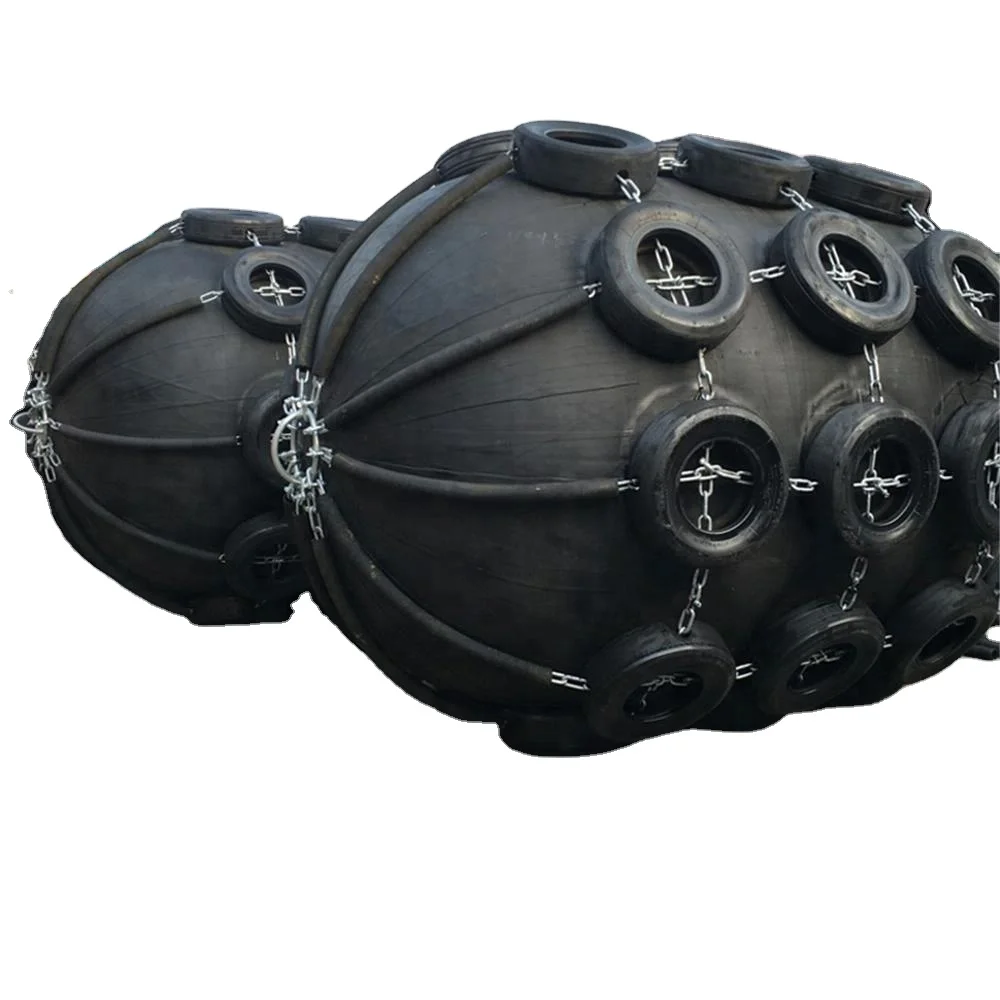
which pneumatic rubber fenders meet international marine standards-1

News

Home >  News

Which pneumatic rubber fenders meet international marine standards?

Nov 07, 2025

ISO 17357-1:2014 and the Core Requirements for Pneumatic Rubber Fenders

Key Design and Performance Criteria in ISO 17357-1:2014

The ISO 17357-1:2014 standard defines pneumatic rubber fender design through six critical benchmarks:

  • Layered construction combining abrasion-resistant outer rubber, synthetic tire cord reinforcements, and airtight inner linings
  • Minimum 97% rebound efficiency after compression cycles to prevent energy loss during vessel impacts
  • Tolerance limits of ±3% for diameter and ±1.5% for length to ensure port compatibility
  • Mandatory 30,000-cycle fatigue testing simulating a 10-year service life

These requirements eliminate substandard materials like nylon mesh, which degrade 40% faster in saltwater compared to ISO-compliant polyester cord reinforcements (Ponemon 2023).

The Significance of P50 and P80 Pressure Ratings in Marine Safety

ISO 17357-1 recognizes two pressure classes:

  • P50 (50 kPa) for coastal barges and moderate conditions
  • P80 (80 kPa) for LNG carriers and Arctic operations

The P80 standard reduces collision risks by maintaining 25% higher reaction forces during STS transfers. A 2023 analysis of 12,000 berthing events showed P80-certified fenders lowered incident rates by 32% in high-traffic ports.

How to Ensure Your Pneumatic Rubber Fender Meets ISO Compliance

Three steps guarantee adherence:

  1. Verify third-party testing for energy absorption (≥1,500 kJ/m³) and air retention (<2% pressure loss/24hrs)
  2. Demand classification society approvals (e.g., ABS Type Approval or Lloyd's Register certification)
  3. Review batch-specific lab reports covering tear resistance (≥40 kN/m) and ozone resistance (≤10% cracking after 96hrs)

As emphasized in the ISO 17357-1:2014 guidelines, manufacturers must document every production stage — from rubber compound viscosity checks to final hydrostatic testing at 1.5x operating pressure.

Key Compliance Metrics:
    • OCIMF MEG4 energy absorption: ≥ 60% of nominal capacity
    • PIANC WG 33: Maximum reaction force variance ≤15% across parallel fenders
    • BSI PAS 2070: Mandatory air retention ≥98% after 72-hour test

Third-Party Certification by Leading Classification Societies

Independent classification societies check that pneumatic rubber fenders actually meet those important international marine safety standards we all talk about. The big names here include ABS, which stands for American Bureau of Shipping, then there's LR from Lloyd's Register, and finally BV or Bureau Veritas. These groups don't just glance at things - they really dig into how products are made, look at what materials go into them, and run all sorts of performance tests to make sure everything lines up with that ISO standard number thingy, 17357-1:2014 if anyone cares about specifics. What's interesting though is their focus on how well these fenders hold up against Mother Nature herself. They perform special accelerated aging tests where they basically throw them under UV lights for days on end and dunk them in salt water tanks. This matters a lot when working on coastal projects where weather conditions can be pretty brutal.

ABS, LR, BV, CCS, and SGS: Roles in Verifying Pneumatic Rubber Fender Compliance

ABS primarily handles validation of energy absorption characteristics for offshore structures, whereas LR tends to concentrate on pressure retention tests at busy port facilities. When companies get certified by SGS, they usually go through rigorous supply chain checks too. These audits help track where materials come from all the way back to their source, which cuts down on problems caused by poor quality rubber mixtures getting into production. A recent study published last year found something interesting about market trends. Suppliers who have certifications from multiple organizations actually see their projects approved much quicker worldwide, around 34 percent faster compared to those without such credentials. This makes sense when considering how different regions have varying requirements and standards across international borders.

Case Study: DNV-Certified Fenders in LNG Terminal Operations

In 2022 when Norway expanded one of their LNG terminals, they needed pneumatic fenders certified by DNV that could absorb at least 65% energy even in freezing conditions down to -30 degrees Celsius. Getting this certification involved going through pretty rigorous testing procedures. First came compression tests at 2.5 times the normal operating pressure, then there was all that material strength checking for tears, followed by those lengthy salt spray tests lasting right around 500 hours straight. After installing these fenders, maintenance teams conducted regular checks over the next eighteen months and found absolutely no air leaks whatsoever. That kind of performance beat what's required under ISO 17357 standards for durability, which makes sense given how tough those Norwegian winters can be on equipment.

Selecting a Globally Recognized Certification for Maximum Market Acceptance

In the Asia-Pacific region, port officials tend to go with CCS certifications from China Classification Society when approving coastal infrastructure projects. Over in Europe, things work differently where many terminal operators need both Lloyd's Register and Bureau Veritas certifications before proceeding. When it comes to liquefied natural gas operations specifically, the industry still looks to DNV for their Type Approval stamp. Why? Because these approvals line up closely with those important OCIMF mooring standards and also meet the PIANC requirements regarding how much energy gets absorbed during docking procedures. Most professionals will tell anyone who asks that getting this particular certification is basically non-negotiable if they want their LNG facility taken seriously by international stakeholders.

Critical Testing Protocols: Energy Absorption, Pressure Retention, and Durability

Standardized Testing for Compression, Rebound, and Impact Resilience

Pneumatic rubber fenders must withstand cyclical berthing forces while maintaining structural integrity. ISO 17357-1:2014 mandates three-stage testing:

  1. Compression: 1,000 cycles at 50% deflection to verify energy absorption ≥70% of rated capacity
  2. Rebound: Measured recovery time ≤30 seconds after sudden load release
  3. Impact: Drop tests simulating vessel approach velocities up to 0.3 m/s

Independent studies show advanced rubber compounds improve impact resilience by 18–28% compared to conventional blends.

Parameter Test Method Acceptable Threshold
Energy Absorption Cyclic Compression (ISO) ≥70% of rated capacity
Pressure Decay 72-hour Retention Test ≤5% loss at P50/P80 ratings
UV Resistance 2,000-hour Xenon Arc Exposure No surface cracking

Air-Tightness and Long-Term Pressure Retention Under ISO 17357

The standard requires pneumatic fenders to retain ≥95% initial pressure for 72 hours at 23°C. Field data from 120 port installations (2023) reveals:

  • P50-rated fenders average 1.2% pressure loss/month in temperate zones
  • P80 models show 0.7% loss/month in tropical environments
    Failures typically trace to valve seal imperfections (38% of cases) or inner liner microperforations (52%).

Validating Performance Through Independent Laboratory Reports

Third-party verification bridges manufacturer claims with operational realities. Accredited labs conduct:

  • Material hardness variations (±3 IRHD tolerance)
  • Tensile strength ≥17 MPa after accelerated aging
  • Peel resistance ≥8 kN/m at rubber-to-fabric interfaces

These metrics correlate with an 89% reduction in mid-lifecycle failures when compliance is rigorously enforced.

Environmental Resistance and Material Durability in Harsh Marine Conditions

Protecting Pneumatic Rubber Fenders Against UV, Salt Spray, and Ozone Exposure

Rubber fenders made for marine environments need special formulas to stand up against things that break them down over time. These include harmful UV rays from the sun, constant soaking in salt water, and damage from ozone in the air. Good quality fenders typically contain materials such as carbon black at around 15 to 25 percent concentration along with certain waxes that help create a shield on the surface. When tested according to standards like ASTM D1149, these well-made products can keep most of their strength intact even after spending over a decade in hot, humid climates. Resistance to salt spray matters just as much though. Fenders that meet specifications usually lose less than five percent of their volume following about 5,000 hours in salt fog chambers following ASTM B117 guidelines. This kind of durability makes all the difference for vessels operating in coastal areas where corrosion is always a concern.

Material Formulations and Additives for Extended Service Life

Leading manufacturers use chloroprene or natural rubber blends fortified with:

  • Hydrolysis-resistant polymers — Prevent molecular breakdown in wet environments
  • Scorch retardants — Extend vulcanization safety margins during production
  • Nitrile modifiers — Enhance oil/fuel resistance in harbor settings

These additives enable service lifetimes exceeding 15 years, as validated by ISO 22488 cyclical compression testing simulating 2.5 million vessel berthings.

Field Performance: Arctic vs. Tropical Deployment Case Studies

Environment Key Challenge Material Adaptation Verified Performance
Arctic (-40°C) Rubber brittleness Low-temperature plasticizers Passed ISO 2230 cold bend test at -50°C
Tropical (45°C) UV/microbial degradation Antimicrobial ZnO additives <2% surface cracking after 8-year field deployment

Independent lab analyses confirm that temperature-optimized formulations maintain ±5% energy absorption consistency across extremes.

FAQ

  • What is ISO 17357-1:2014?

    ISO 17357-1:2014 is an international standard that outlines the design, performance, and compliance criteria for pneumatic rubber fenders used in marine environments.

  • What are the pressure ratings in ISO 17357-1?

    The standard recognizes two pressure classes, P50 (50 kPa) for moderate conditions and P80 (80 kPa) for more demanding environments like LNG carriers.

  • Why is third-party certification important for pneumatic fenders?

    Third-party certification ensures that pneumatic fenders comply with international standards for safety and performance, and it is often required for project approvals and international tenders.

  • What materials enhance the durability of pneumatic rubber fenders?

    Pneumatic rubber fenders are made with materials such as hydrolysis-resistant polymers, scorch retardants, and nitrile modifiers to enhance durability in harsh marine conditions.

Get a Free Quote

Our representative will contact you soon.
Email
Mobile/WhatsApp
Name
Company Name
Message
0/1000